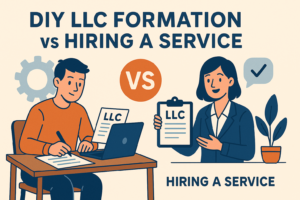
Forming a Limited Liability Company (LLC) in Florida is an exciting venture for many entrepreneurs, yet the process is fraught with potential pitfalls that can lead to costly setbacks. Whether you’re navigating the process independently or using professional services, being aware of common mistakes is crucial. Let’s explore these pitfalls and equip yourself with the knowledge to sidestep them efficiently.
1. Neglecting Thorough Name Research
A crucial first step in forming your Florida LLC is selecting a unique business name. Many entrepreneurs overlook the importance of conducting a comprehensive name search. This misstep can lead to:
Rejection of your LLC formation documents: If your chosen name is already in use, the Florida Division of Corporations will reject your filing.
Legal challenges: Using an existing trademarked name can result in legal disputes and costly rebranding.
Utilize resources like the SunBiz website to ensure your business name is distinctive and compliant with Florida’s naming guidelines.
2. Misunderstanding the Importance of an Operating Agreement
Although Florida does not legally mandate an Operating Agreement, its importance cannot be overstated. An Operating Agreement outlines the management structure and operational procedures of your LLC. Common oversights include:
Failure to document ownership percentages and profit distribution.
Lack of clarity on decision-making processes and member responsibilities.
Having a well-drafted Operating Agreement can prevent internal conflicts and provide a clear framework for your LLC’s operations.
3. Overlooking the Need for an Employer Identification Number (EIN)
An EIN is essential for various business activities, such as opening a bank account and filing taxes. Many new business owners neglect this step, facing issues like:
Inability to hire employees: An EIN is required for payroll purposes.
Tax complications: An EIN separates your personal and business tax liabilities.
Ensure you apply for an EIN promptly through the IRS website to keep your business operations smooth.
4. Failing to Stay Compliant with State Regulations
Once your LLC is formed, staying compliant with Florida’s regulatory requirements is vital. Many entrepreneurs neglect:
Timely filing of annual reports: Missing this deadline can result in penalties or dissolution of your LLC.
Maintaining a registered agent: A registered agent ensures your business receives legal documents efficiently.
Consult resources such as Legal Doc Prep Notary for guidance on maintaining compliance and protecting your LLC status.
5. Ignoring the Importance of a Fictitious Name (DBA)
If your LLC intends to operate under a name different from its registered name, obtaining a fictitious name registration is necessary. Overlooking this step can lead to:
Branding challenges: Operating under an unregistered name can confuse clients and customers.
Legal issues: Failure to register a DBA can result in fines and legal complications.
Ensure you follow the proper procedures to register your DBA, enhancing your business’s credibility and brand recognition.
By understanding and avoiding these common mistakes, you’ll be better prepared to register your Florida LLC successfully. Whether you choose to handle the process yourself or seek professional assistance, informed decision-making is key to a seamless LLC formation journey.
DIY LLC Formation vs Hiring a Service: Which Path Should You Choose?
By Mark Sias | 8 min read
You’re ready to start your business. You know you need an LLC. Now comes the big question: should you form it yourself or hire someone to do it for you?
I get asked this question almost every day, and honestly? The answer isn’t what most people expect.
Let me share what I’ve learned after helping hundreds of entrepreneurs form their LLCs…
The Dilemma Every New Business Owner Faces
Picture this: You’re excited about your business idea. You’ve been researching for weeks. Everyone says you need an LLC. So you Google “how to form an LLC” and suddenly you’re drowning in options:
LegalZoom promises to do everything for $299 (plus fees)
ZenBusiness advertises “$0 LLC formation” (with lots of asterisks)
Random blog posts say “just do it yourself, it’s easy!”
Your friend hired a lawyer and paid $2,000
Who’s right? What should YOU do?
Let me break down the real pros and cons of each approach—including a third option most people don’t even know exists.
The DIY Approach: What They Don’t Tell You
When I started my first business, I decided to form my LLC myself. “How hard could it be?” I thought. “I’ll save money and learn something!”
Selling your information – Some services sell contact data
Don’t get me wrong—these services DO file your paperwork correctly. But at what cost?
🧮 The 5-Year Math
Formation service total over 5 years: $1,500 – $3,000+
DIY with our guidance: $707 (includes everything)
You save: $793 – $2,293
When Hiring a Service Makes Sense
Formation services aren’t evil. They work for some people:
✅ You have $500-1,000 to spend upfront
✅ You have absolutely zero time
✅ You never want to learn how LLCs work
✅ You’re okay paying annual fees forever
✅ You don’t mind being dependent on them
But here’s the thing: most people don’t actually fall into this category. They just think they do.
The Third Option Nobody Talks About
So DIY takes forever and stresses you out. Formation services are expensive and keep you dependent.
There has to be a better way, right?
There is. And it’s how I wish I had done my first LLC.
What If You Could…
✅ Complete your LLC formation in 2-3 hours (not 20)
✅ Know exactly what to do at every step
✅ Pay only $152 total (not $500-1,000)
✅ Learn the system once, use it forever
✅ Never wonder if you did something wrong
✅ Avoid all the common mistakes
✅ Save money on strategies services won’t tell you
This is called the “guided DIY” approach, and it’s honestly the best option for 75% of people.
How Guided DIY Works
Instead of spending 20 hours figuring everything out yourself OR paying $1,500-3,000 to stay dependent on a service, you:
Invest 1-2 hours learning from someone who’s done this hundreds of times
Follow step-by-step video instructions showing exactly what to click and what to choose
File your LLC yourself with complete confidence (takes about 30 minutes)
Set up everything correctly using included templates and guidance
Know how to handle everything going forward without paying anyone
Think of it like this:
Pure DIY = Trying to build IKEA furniture without instructions Formation service = Paying someone $500 to build your IKEA furniture Guided DIY = Following the instructions and building it yourself in 30 minutes
Which makes more sense?
Why I Created LLC Launch Florida
After I struggled through my first LLC formation, I started helping friends with theirs. Word spread. Soon I was getting calls from friends of friends:
“Can you help me? I started the Sunbiz application but I’m stuck on Article IV…”
“I hired LegalZoom but they want $199 more for an Operating Agreement. Do I really need that?”
“I filed three weeks ago and it got rejected. Now I’m out $125 and I have no idea what I did wrong…”
No fluff. No confusing legal jargon. Just: “Click here. Type this. Choose that. Here’s why.”
What’s Actually In The Course
Look, I’m not going to give you a hard sell. You’re smart enough to decide what’s right for you.
But let me show you what you get so you can compare it to your other options:
📹 Module 1: Formation Mastery
Screen-by-screen video walkthrough of Sunbiz filing
Every field explained in plain English
Member vs. Manager-managed decision framework
The effective date money-saving strategy (alone saves $138.75)
Name research to avoid rejections
Registered agent selection guide
Time to complete: 30-45 minutes
Value: Prevents $125 rejected filing + saves 5-10 hours
📋 Module 2: Operating Agreement
Single-member template (Florida-specific)
Multi-member template (Florida-specific)
How to actually USE your Operating Agreement
Customization guidance
Bank-ready formatting
Time to complete: 20 minutes
Value: Formation services charge $99 for generic templates
💼 Module 3: Post-Formation Essentials
EIN application walkthrough (screen recording)
Non-resident EIN guidance
Business bank account setup
What banks actually require
Service Agreement templates
Time to complete: 30 minutes
Value: Formation services charge $70 for EIN
📅 Module 4: Annual Compliance
How to file annual reports yourself
Avoiding the $400 late penalty
Deadline tracking system
Amendment procedures
Time to complete: 20 minutes
Value: Services charge $199/year for compliance tracking
🎁 BONUS: Business Credit System
How to build $50K+ in business credit
Separate from your personal credit
Vendor accounts you can apply for immediately
Business credit card strategies
Net-30 account walkthrough
Time to complete: 45 minutes
Value: This alone is worth thousands in available funding
💰 Total Package Value Breakdown
What you pay: $27 (course) + $125 (state fee) = $152 total
What you get:
Operating Agreement templates: $99 value
EIN guidance: $70 value
Compliance system: $199/year value
Business credit training: Priceless (enables $50K+ funding)
20+ hours of research: $500-2,000 value
Mistake prevention: $125-400 saved
Lifetime access: Forever
Conservative value: $1,000+
Let’s Do The Real Math
I’m a numbers guy, so let me break this down clearly:
Option 1: Pure DIY
Cost: $125 state fee + $0-50 templates = $125-175 Time: 15-25 hours of research and work Mistake risk: High (40%+ make costly errors) Confidence level: Low (“I think I did it right?”) Future support: Research everything again Ongoing dependency: None (but no knowledge either)
Option 2: Formation Service
Year 1 cost: $500-800 with upsells Years 2-5 cost: $250-400/year (registered agent, compliance) 5-year total: $1,500-2,400 Time: 2-4 hours Learning: Zero Ongoing dependency: Permanent
Option 3: Guided DIY (Our Course)
Year 1 cost: $152 ($27 course + $125 state fee) Years 2-5 cost: $138.75/year (annual reports you file yourself) 5-year total: $707 Time: 2-3 hours total Learning: Complete mastery Ongoing dependency: None (you know how to do everything)
The Winner: Guided DIY
Saves $793-1,693 vs. formation services over 5 years Saves 12-22 hours vs. pure DIY Same confidence as hiring a service Complete independence forever
But Wait… Isn’t This Just Another Course?
Fair question. The internet is full of courses promising everything.
Here’s why this is different:
1. It’s Stupid Cheap
$27. That’s less than a tank of gas. Less than a couple of Chipotle burritos. Less than one rejected LLC filing.
I could charge $199 and it would still be worth it compared to your alternatives. But I wanted to make this accessible to everyone starting a business.
2. It Pays For Itself Immediately
The effective date strategy alone saves you $138.75. The course costs $27. That’s a 414% immediate ROI.
Over 5 years, you save $793-1,693 compared to formation services. That’s a 2,900% ROI.
3. It’s Based On Real Experience
I’ve personally helped hundreds of people form their Florida LLCs. I know every question you’ll have because I’ve answered it 100 times.
This isn’t theory. It’s battle-tested, real-world guidance.
4. It’s Florida-Specific
Generic LLC courses don’t cover Florida’s specific requirements. This course was built specifically for the Florida LLC formation process.
5. You Get Lifetime Access
Laws change. The course gets updated. You always have access to the current version.
Need to form another LLC in 3 years? Just log back in. No additional cost.
6. There’s a Money-Back Guarantee
Try it. If it doesn’t save you time, money, and stress, email me within 30 days for a full refund.
No questions asked. No hard feelings.
What People Are Saying
“This Course Covered All MY Concerns When Starting & Filing An LLC & DBA With SunBiz. I was able to complete the process confidently and correctly the first time. Worth every penny!”
“I was about to pay LegalZoom $600. Found this course, spent $27, and did it myself in a few hours. Saved over $500 and actually understand my business structure now. Best investment I made for my business.”
“5-stars for this practical, info packed tutorial! I had been procrastinating for months because I was overwhelmed. This made everything crystal clear. My LLC is now formed and I’m actually in business!”
So… Which Option Is Right For You?
Here’s my honest recommendation:
Choose Pure DIY If:
You have 20+ hours of free time
You genuinely enjoy reading legal documents and researching
You’re comfortable with uncertainty and mistakes
You’ve formed businesses before
This fits about 5% of people
Choose a Formation Service If:
You have $500-1,000+ to spend upfront
You’re okay with $200-400/year recurring costs
You never want to learn how your LLC works
You prefer complete hands-off convenience over savings
This fits about 20% of people
Choose Guided DIY If:
You want to save $700-1,600 over 5 years
You have 2-3 hours to invest in learning
You want complete confidence in what you’re doing
You want to understand your business structure
You want to be independent going forward
You appreciate step-by-step guidance
This fits about 75% of people
My Honest Opinion
If you’re reading this blog post, you’re probably in the 75%.
You’re research-oriented (that’s why you’re here). You value your money. You want to do things right. But you don’t want to waste weeks figuring it out.
🛡️ 30-Day Money-Back Guarantee – If this doesn’t save you time, money, and stress, get a full refund. No questions asked.
Not Ready To Commit? I Get It.
Starting a business is a big decision. Maybe you want to think about it.
That’s totally fine. But don’t let analysis paralysis stop you from moving forward.
Here are your options:
Option 1: Keep Researching
You can spend the next few weeks reading blog posts, watching YouTube videos, and trying to piece everything together yourself.
Cost: Your time (15-25 hours) Result: Maybe you’ll figure it out, maybe you’ll make mistakes
Option 2: Hire a Formation Service
You can go to LegalZoom, ZenBusiness, or another service and pay $500-800 to have them handle it.
Cost: $500-800 first year, $1,500-2,400 over 5 years Result: Your LLC gets formed, but you learn nothing and stay dependent
Option 3: Invest In Yourself
You can invest $27 in learning how to do this correctly, once and for all.
Cost: $27 + 2-3 hours of your time Result: Your LLC gets formed correctly, you understand everything, you save $700-1,600, you’re independent forever
Which option moves you closer to your business goals?
Questions I Get All The Time
Q: Can’t I just follow free YouTube videos?
A: You can try, but here’s the problem: YouTube videos are scattered, often outdated, contradict each other, and rarely show you the actual filing process screen-by-screen. You’ll spend hours watching different videos trying to piece together the full picture. The course gives you everything in one place, organized in the right order, completely up-to-date.
Q: What if I have questions during the process?
A: The course is designed to answer every question you’ll have before you even have it. But if you get stuck, the detailed video walkthroughs show you exactly what to do. Plus, you have lifetime access—watch as many times as you need.
Q: Is this really worth $27 when I can form an LLC for free with Incfile?
A: Incfile’s “free” formation requires you to pay $119/year for their registered agent service. Over 5 years, that’s $595. Plus you still need to figure out Operating Agreements, EIN applications, annual reports, etc. Our course costs $27 once and teaches you how to handle everything yourself. You save hundreds.
Q: I’m not tech-savvy. Can I still do this?
A: Absolutely. The course includes actual screen recordings showing you exactly where to click and what to type. If you can watch a video and follow along, you can do this. No technical skills required.
Q: What if Florida law changes?
A: You get lifetime access, which includes all future updates. When Florida changes LLC requirements (which is rare), we update the course and you automatically have access to the new version.
Q: Do you offer refunds?
A: Yes! 30-day money-back guarantee. If the course doesn’t save you time and money, just email us for a full refund. No hoops to jump through.
Q: Can I use this for multi-member LLCs?
A: Yes! The course covers both single-member and multi-member LLCs, including the different Operating Agreement templates and management structures you’ll need.
The Bottom Line
You have three paths to form your Florida LLC:
🤯 Pure DIY
20+ hours
$125-175
High stress
Maybe done right
💸 Formation Service
2-4 hours
$1,500-2,400 (5 years)
Low stress
Done right, but dependent
🎯 Guided DIY
2-3 hours
$707 (5 years)
No stress
Done right + independent
The choice is yours.
But if you want to save time, save money, and actually understand your business structure, the guided DIY approach is the obvious choice.
Start Your LLC The Smart Way
Get the complete LLC Launch Florida system for just $27:
P.S. – Every day you wait is another day your personal assets are at risk and your business idea stays a dream. The course takes 2-3 hours. You could have your LLC formed by tomorrow.
P.P.S. – The $27 investment prevents just ONE costly mistake. A rejected filing costs $125. A late annual report costs $400. The course pays for itself immediately.
P.P.P.S. – Still on the fence? Remember the 30-day guarantee. Try it completely risk-free. If it doesn’t help, get every penny back. You literally cannot lose.
File Application for Registration of Fictitious Name, $50 filing fee, must advertise once in county newspaper before filing Florida Registered Agent
Renewal Requirements:
Valid until December 31st of the fifth year after registration, must renew to maintain Florida Registered Agent
Side-by-Side Comparison
Feature
LLC
DBA
Legal Status
Separate legal entity
Not an entity (just a name)
Liability Protection
✅ YES – Personal assets protected
❌ NO – Full personal liability
Initial Cost
$125
$50 + newspaper ad ($25-150)
Annual Cost
$138.75 (annual report)
$0 (until 5-year renewal)
Formation Time
1-2 business days
1-2 business days
Tax Flexibility
✅ Multiple options
❌ Taxed as individual
Business Credit
✅ Can build separate credit
❌ Uses personal credit only
Ownership Transfer
✅ Can sell or transfer
❌ Cannot transfer (it’s you)
Professional Image
✅✅ Highest credibility
✅ Better than personal name
Hiring Employees
✅ Easier
❌ More complex
Banking
Easier to open business accounts
Harder without LLC
Contracts
Business signs, not you personally
You sign personally
Lawsuit Protection
✅ LLC is sued, not you
❌ You are sued personally
Perpetual Existence
✅ Continues beyond owner
❌ Ends with owner
Complexity
Moderate (operating agreement, etc.)
Simple
Maintenance
Annual reports, compliance
Minimal
Renewal
Annual reports forever
Every 5 years
The Critical Difference: Liability Protection
This is the #1 reason people choose LLC over DBA.
Scenario: Someone Sues Your Business
With a DBA (Sole Proprietorship):
You’re sued personally
Your house can be taken
Your car can be taken
Your personal bank accounts can be seized
Your retirement savings are at risk
Your spouse’s assets may be at risk
You file personal bankruptcy if judgment is large
With an LLC:
The LLC is sued (not you personally)
Only LLC assets are at risk
Your personal house is protected*
Your personal car is protected*
Your personal savings are protected*
Your spouse’s assets are protected*
LLC declares bankruptcy, not you personally
**Assuming you maintain proper corporate formalities and don’t commit fraud
High-Risk Industries That Should NEVER Use DBA:
Construction & contractors
Property management
Event planning
Fitness/personal training
Consulting with professional liability
Food service
Child care
Pet services
Any business involving physical risk
Lower-Risk Businesses That MIGHT Use DBA:
Freelance writing/graphic design
Online retail (dropshipping)
Affiliate marketing
Digital products
Low-liability consulting
Virtual assistance
But even these should consider LLC for credibility and growth.
Cost Comparison: 5-Year Analysis
Let’s look at the real costs over 5 years:
DBA (Sole Proprietorship)
Year 1:
Registration: $50
Newspaper ad: $75 (average)
Total: $125
Years 2-4:
No annual fees: $0
Year 5:
Renewal: $50
Total: $50
5-Year Total: $175
LLC
Year 1:
Formation: $125
Operating Agreement (DIY with course): $0
Annual Report: $138.75
Total: $263.75
Years 2-5:
Annual Report (each year): $138.75 × 4 = $555
5-Year Total: $818.75
The Real Question:
Is $643.75 more ($818.75 – $175) over 5 years worth:
Complete liability protection?
Professional credibility?
Better banking options?
Ability to build business credit?
Tax flexibility?
Easier employee hiring?
Ability to sell the business?
For most businesses: Absolutely yes.
Tax Differences
DBA Taxation:
Taxed as sole proprietor (if individual owner)
All income reported on personal Schedule C
Pay self-employment tax on all profits (15.3%)
No tax flexibility
Simple tax filing
LLC Taxation:
Default: Taxed like sole proprietor (single-member) or partnership (multi-member)
Option: Elect S-Corp status to save on self-employment taxes
Option: Elect C-Corp status if needed
More complex, but potentially significant tax savings
Requires separate business tax return (if multi-member or electing corp status)
Tax Savings Example: If your LLC profits $80,000 and you elect S-Corp status, you could save $3,000-5,000 in self-employment taxes annually. That’s $15,000-25,000 over 5 years – way more than the extra LLC costs!
Banking and Credit Differences
With DBA:
Can open business account (but harder without LLC)
Business credit tied to personal credit
Personal credit score affects business
Personal credit cards mixed with business expenses
Harder to get business loans
Personal credit at risk if business fails
With LLC:
Easier to open business bank accounts
Can build separate business credit profile
Business credit independent of personal
Access to business credit cards
Business loans don’t affect personal credit
Better borrowing terms
Can establish Net-30 trade lines
Building business credit properly can provide:
$50,000-250,000+ in business credit
Without personal credit check
Without personal guarantee
0% APR promotions
Rewards and cash back
Our course includes bonus business credit training
Can You Have BOTH LLC and DBA?
Yes! This is actually very common.
Why You’d Want Both:
Your LLC is: Smith Cleaning Services, LLC
But you operate under DBAs:
“Sparkle Clean” (residential cleaning)
“Corporate Shine” (commercial cleaning)
“Green Clean Solutions” (eco-friendly option)
Benefits:
✅ One LLC provides protection for all brands
✅ Multiple DBAs for different marketing
✅ Cost-effective brand expansion
✅ Easier management than multiple LLCs
✅ Flexible business model
How It Works:
Form your LLC ($125)
Register each DBA under the LLC ($50 each)
File one annual report for LLC ($138.75)
Renew each DBA every 5 years ($50 each)
There is no statutory limit to the number of DBAs you may register for your business Florida Registered Agent
Decision Framework: Which Should YOU Choose?
Start with These Questions:
1. Are you willing to risk your personal assets?
No → LLC
Yes → Consider DBA (but why risk it?)
2. How much liability does your business have?
High risk (physical work, property, contracts) → LLC
Low risk (digital, virtual) → Could use DBA, but LLC is better
3. Do you want to hire employees?
Yes → LLC
No/Maybe → Either
4. Do you want to build business credit?
Yes → LLC
No → DBA
5. Do you plan to grow and scale?
Yes → LLC
Just testing/side hustle → Could start with DBA
6. Do you need professional credibility?
Yes (B2B, professional services) → LLC
Not important → Either
7. What’s your annual revenue/profit goal?
Over $50,000 → LLC (tax savings potential)
Under $50,000 → Either, but LLC still better
8. Do you have other business partners?
Yes → LLC (operating agreement essential)
No → Either
Common Scenarios
Scenario 1: Freelance Graphic Designer
Situation:
Working from home
Small clients
$30,000 annual income
Just starting out
Low liability risk
Recommendation: Still form an LLC. Even though risk is lower, the professional credibility helps win clients, and if income grows, you’ll have tax savings options. Plus, if you accidentally use copyrighted material or a client sues, you’re protected.
Cost: Extra $130/year is worth the protection and professionalism.
Scenario 2: Pressure Washing Business
Situation:
Working on client property
Using equipment and chemicals
Potential property damage risk
Hiring helpers
$75,000 annual revenue
Recommendation:ABSOLUTELY MUST form an LLC. High liability. One lawsuit without LLC protection could take your house. Non-negotiable.
Scenario 3: Amazon FBA Seller
Situation:
Selling products online
No physical location
$100,000 annual revenue
Product liability concerns
Recommendation: Form an LLC. Product liability is real – defective products, injuries, etc. Plus at $100K revenue, S-Corp election could save $5,000+ yearly in taxes.
Scenario 4: Real Estate Investor
Situation:
Buying rental properties
Dealing with tenants
Property liability
Multiple properties planned
Recommendation: Form LLC for each property or one LLC for all (depending on strategy). Real estate investors NEED LLCs. Tenant lawsuits, property issues, liability – all very real risks.
Scenario 5: Testing a Business Idea
Situation:
Not sure if business will work
Very limited budget
No revenue yet
Want to validate concept first
Recommendation: This is the ONE scenario where starting with a DBA might make sense. Test the concept for 3-6 months. If it gains traction, immediately form an LLC. Don’t wait until you have revenue/clients to get protection.
The Biggest Myth: “I’ll Start with DBA and Switch to LLC Later”
This sounds logical but has problems:
Issues with Switching:
Confusion – Clients know you by DBA name
New EIN required – LLC gets its own tax ID
New bank account – Have to transfer everything
Contract complications – Existing contracts in wrong name
Marketing reset – Business cards, website, etc. all change
Time wasted – Why not just start right?
The Smart Approach:
Form LLC with a DBA from the start:
LLC: “Your Name, LLC”
DBA: “Your Cool Business Name”
Get protection AND the name you want
No switching required later
Total cost difference: Only $50 more initially
What About Other Entities?
Sole Proprietorship
No registration needed (automatically are one)
Same as DBA for liability (none)
Can operate under your personal name
Corporation (C-Corp or S-Corp)
More complex than LLC
Double taxation (C-Corp) or restrictions (S-Corp)
Better for large businesses, investors, going public
Most small businesses should choose LLC
Partnership
Two or more people
Should form LLC instead for liability protection
General Partnership = full liability for all partners
Limited Partnership = complex, outdated
Nonprofit Corporation
For tax-exempt organizations
Completely different rules
Not for profit-making businesses
For 95% of Florida small businesses: LLC is the best choice.
Still Not Sure? Ask Yourself This One Question
“If someone sues my business tomorrow, do I want my house at risk?”
If the answer is no → Form an LLC
It really is that simple.
How to Form Your Florida LLC (The Right Way)
Now that you know you need an LLC, here’s what you need to do:
“This Course Covered All MY Concerns When Starting & Filing An LLC & DBA With SunBiz” – Amy B., Founder of In-Home Tender Loving Care, LLC
“5-stars for this practical, info packed tutorial!” – Cassandra S., Small Business Owner
Investment vs. Alternatives
Option 1: Hire a Lawyer
Cost: $1,000-2,500 for formation
Time: 1-2 weeks
Learning: Minimal (they do it)
Future needs: Pay again
Option 2: Formation Service
Cost: $300-800 + state fees
Time: 1 week
Learning: None
Hidden fees: Upsells for everything
Option 3: DIY With Our Course
Cost:$47$27 one-time
Time: 2-3 hours, done right
Learning: Complete mastery
Future: Handle everything yourself
Plus state fees ($125 LLC + optional $50 DBA)
Limited-Time Offer
Regular Price:$47 Today Only: $27
✅ Lifetime access to all training ✅ All future updates FREE ✅ Legal document templates included ✅ Business credit building bonus ✅ 30-day money-back guarantee
Q: Can I start with a DBA and form an LLC later? A: Yes, but it’s messier. Better to form LLC with DBA from the start if you want a specific business name with protection.
Q: If I have an LLC, do I still need a DBA? A: Only if you want to operate under a name different from your registered LLC name.
Q: Can one LLC have multiple DBAs? A: Yes, there is no statutory limit to the number of DBAs you may register Florida Registered Agent
Q: Is an LLC worth it for a side hustle? A: Yes. The $125 formation fee and $138.75 annual fee are worth the liability protection, even for part-time businesses.
Q: Do I need an LLC to get an EIN? A: No, but having an LLC makes many business activities easier.
Q: Can I form an LLC if I’m not a US citizen? A: Yes! Non-residents can form Florida LLCs. Our course includes special guidance for non-resident EIN applications.
Q: What if I choose wrong? A: You can always form an LLC later, but you can’t go backwards. Better to have protection from day one.
The Bottom Line
For most Florida businesses:
✅ Form an LLC (with or without DBA depending on name needs)
The extra $643 over 5 years is worth:
Complete liability protection
Professional credibility
Tax flexibility
Business credit opportunities
Long-term growth options
Peace of mind
The only time to consider DBA alone:
Testing a very low-risk business idea
Absolute minimum budget
Very short-term project
But even then, LLC is the safer choice.
Take Action Today
Don’t leave your personal assets at risk another day.
Florida’s Sunbiz system processes over 3.5 million business entities. Every day, thousands of business owners navigate this portal to form LLCs, register DBAs, and file annual reports.
And every day, many of them make preventable mistakes that cost hundreds (or thousands) of dollars.
The worst part? Most of these mistakes are completely avoidable – if you know what to watch out for.
In this guide, we’re revealing the 10 most common (and costly) Sunbiz mistakes we’ve seen after helping hundreds of Florida business owners, plus exactly how to avoid them.
Bottom line: This guide could save you $1,500-$3,000+ in penalties, fees, and headaches.
Mistake #1: Choosing an Unavailable or Problematic Business Name
The Mistake:
You search Sunbiz, see your desired name isn’t listed, assume it’s available, and file your Articles of Organization or DBA application.
Result: Your filing gets rejected because:
The name is too similar to an existing business
There’s a trademark conflict the database doesn’t show
You used restricted words without proper authorization
You included entity indicators incorrectly
The Real Cost:
LLC Formation: $125 filing fee lost
DBA Registration: $50 filing fee lost
Time Lost: 1-2 weeks minimum
Business Launch Delayed: Can’t open bank accounts or operate legally
Why This Happens:
Sunbiz’s name search only shows exact matches and businesses registered with the Florida Division of Corporations. It doesn’t show:
Federal trademarks
Similar-sounding names
Businesses in other states doing business in Florida
Common law trademarks
How to Avoid It:
✅ Do a comprehensive search:
Search Sunbiz (obviously)
Search USPTO trademark database
Google the name + “Florida”
Check domain availability
Search social media handles
✅ Follow naming rules:
LLCs must include “Limited Liability Company,” “L.L.C.,” or “LLC”
DBAs cannot contain business entity suffixes like “LLC” or “Inc.” unless the owner is actually that type of entity sunbiz
Avoid restricted words: “bank,” “trust,” “insurance,” “university” without authorization
✅ Make it distinguishable: Don’t just add “LLC” to an existing business name and think you’re safe. The name must be clearly different.
✅ Consider name reservation: If you haven’t completed requirements but worry about losing your name, reserve it by submitting a letter to the Florida Secretary of State with a $25 fee Inc Authority
💡 Pro Tip: Our course includes a complete name research strategy that prevents rejections.
Mistake #2: Missing the Annual Report Deadline (The $400 Penalty)
The Mistake:
You form your LLC, get busy running your business, and forget about the annual report requirement.
May 2nd arrives. You suddenly remember. You now owe $538.75 instead of $138.75.
The Real Cost:
Immediate: $400 late fee (non-waivable)
Long-term: Risk of administrative dissolution
Business Impact: Potential loss of business name, legal protection, and active status
Why This Happens:
You didn’t know about the annual report requirement
You ignored the email reminders (they went to spam)
You thought “nothing changed, so I don’t need to file”
You filed your LLC late in the year without using the effective date strategy
How to Avoid It:
✅ Understand the timeline:
First annual report is due January 1st of the year following formation Sunbiz– Filing window: January 1 – May 1
After May 1st, a $400 late fee is automatically added Sunbiz ✅ Set multiple reminders:
Calendar alert for January 15
Calendar alert for April 15
Calendar alert for April 28 (last-minute backup)
✅ Don’t rely on state reminders: While the state sends 4 courtesy reminders starting mid-January, LLC University® emails can go to spam or wrong addresses.
✅ Use the effective date hack: If forming your LLC in November or December, add an effective date of January 1st of the following year. This delays your first annual report by a full year and saves you $138.75.
Example:
Form LLC: December 15, 2024
Add effective date: January 1, 2025
First annual report due: January 1, 2026 (not 2025)
Savings: $138.75
💡 Pro Tip: The effective date strategy alone pays for our entire course.
Mistake #3: Incorrect or Incomplete Registered Agent Information
The Mistake:
You list yourself as registered agent and provide:
A P.O. Box address
Your LLC’s name as the registered agent
An out-of-state address
Missing signature
Result: Filing rejected. $125+ down the drain.
The Real Cost:
LLC Formation: $125 filing fee lost
Annual Report Issues: Can’t update if info is wrong
Legal Problems: Miss important legal notices and deadlines
Business Operations: Can’t properly receive service of process
Why This Happens:
People don’t understand registered agent requirements or rush through Article III without reading carefully.
The Rules:
The registered agent must be a Florida resident OR a Florida-registered business entity, must have a Florida street address (P.O. Box NOT acceptable), and must sign the form accepting the obligations
sunbizThe LLC cannot serve as its own registered agent
sunbiz### How to Avoid It: ✅ Understand your options:
Option 1: You (if Florida resident with street address)
Option 2: A trusted Florida friend/family member
Option 3: Professional registered agent service ($50-300/year)
✅ Provide complete information:
Full legal name of agent
Florida street address (not P.O. Box)
Signature accepting the role
✅ Consider the implications: If you’re your own registered agent:
You must be available during business hours
Your home address becomes public record
You’ll receive legal notices at this address
✅ Keep information current: If your registered agent moves or changes, you must update immediately or risk missing critical legal notices.
💡 Pro Tip: Many business owners use a professional service to keep home addresses private and ensure they never miss legal documents.
Mistake #4: Not Understanding Member-Managed vs. Manager-Managed (Article IV)
The Mistake:
You skip Article IV thinking it’s optional, or you choose the wrong management structure without understanding the implications.
Result:
Banks refuse to open your business account
You need to file an amendment ($25+)
Operating Agreement conflicts with your filed structure
Tax implications you didn’t anticipate
The Real Cost:
Amendment Filing: $25-50
Delayed Banking: Can’t open accounts for weeks
Potential Tax Issues: Wrong structure for your situation
Legal Complications: Confusion about who has authority
Why This Happens:
Although Article IV information is optional at the time of filing, most financial institutions require this information to be recorded with the Florida Department of State in order to open an account
Best for: Single-member LLCs or small partnerships where everyone is active
Manager-Managed (Use “MGR”):
Designated manager(s) run daily operations
Other members are passive investors
Best for: LLCs with silent partners or complex structures
How to Avoid It:
✅ Complete Article IV at formation: Don’t skip it. Banks need this information.
✅ Choose the right structure:
Single member doing everything? → Member-managed (use “AMBR”)
Multiple owners, some passive? → Manager-managed (use “MGR”)
✅ Use correct designations:
“AMBR” = Authorized Member
“MGR” = Manager
✅ Match your Operating Agreement: Your management structure in your Articles should match your Operating Agreement.
💡 Pro Tip: Our course explains both structures in plain English and helps you choose the right one for your situation.
Mistake #5: Forgetting the Newspaper Publication Requirement for DBAs
The Mistake:
You complete the DBA application (Form CR4E001), pay your $50, and submit it to Sunbiz.
You forget one critical requirement: The name you register must be advertised at least once in a newspaper located within the county where your principal place of business is located
Legal Risk: Operating under an unpublished fictitious name
Compliance Issues: You signed the form certifying you published (but didn’t)
Potential Penalties: False certification is a third-degree felony under Florida law
Additional Cost: $25-150 for newspaper publication (depending on county/paper)
Why This Happens:
Proof of advertisement is not required to be submitted. You, the applicant, certify the name has been advertised when you sign the application
Pe Florida Department of Stateople think this means they don’t have to do it. Wrong. You must publish; you just don’t have to submit proof.
How to Avoid It:
✅ Publish BEFORE filing: The law requires publication before or at the time of registration.
✅ Find qualified newspapers: Must be a newspaper as defined in Chapter 50, Florida Statutes, in your county.
✅ Keep proof: Even though you don’t submit it, keep your publication receipt. If ever questioned, you’ll need proof.
✅ Budget for it: Publication costs $25-150 depending on your county and chosen newspaper.
Publication Template:
Notice is hereby given that [Your Name/Company Name], desiring to engage in business under the fictitious name of [DBA Name], located at [Address], [City], [County], Florida [Zip], intends to register the said name with the Division of Corporations, Florida Department of State, Tallahassee, Florida.
💡 Pro Tip: Our course includes the exact publication template and guidance on finding newspapers in every Florida county.
Mistake #6: Using Wrong Addresses or Leaving Fields Blank
The Mistake:
You provide:
P.O. Box where street address required
Future address that isn’t occupied yet
Incomplete address (missing unit number)
Wrong address format
Result: Filing rejected or critical mail goes to wrong location.
The Real Cost:
Rejected Filings: $50-125 lost
Missed Notices: Don’t receive important state correspondence
Annual Report Issues: Reminders go to wrong email
Legal Problems: Service of process fails
Why This Happens:
People rush through forms or don’t understand which addresses serve which purposes.
Address Requirements:
For LLCs (Articles of Organization):
Principal Office Address: Must be street address (can be anywhere, even out of state)
Mailing Address: Can be P.O. Box
Registered Agent Address: Must be Florida street address (NO P.O. Box)
For DBAs (Fictitious Name):
Mailing Address: Where acknowledgment will be sent
Principal Place of Business: The county (not full address)
How to Avoid It:
✅ Read each field carefully: Note whether it asks for “street address” or “mailing address”
✅ Never use unoccupied addresses: Do not use an address that is not yet occupied. All future mailings and any certification requested will be sent to the address in Section 1
✅ Never mark “Applied For” unless you actually applied: If you haven’t applied yet, don’t check that box.
✅ Update Sunbiz with your EIN: Once you have it, update your records through annual report or amendment.
✅ Special situation – Non-residents: If you’re not a U.S. resident, getting an EIN is more complex and requires mail/fax application.
💡 Pro Tip: Our course includes step-by-step EIN application tutorials, including special guidance for non-residents.
Mistake #8: Ignoring Operating Agreements and Service Agreements
The Mistake:
You form your LLC, get your certificate, and think you’re done.
You skip:
Creating an Operating Agreement
Creating Service Agreements for clients
Understanding corporate formalities
Result:
Bank refuses to open account without Operating Agreement
Legal disputes between members with no written rules
Potential piercing of corporate veil
IRS classification issues
The Real Cost:
Hiring a Lawyer Later: $500-2,000 to create documents
Legal Disputes: Thousands in attorney fees
Lost Liability Protection: Personal assets at risk
Banking Delays: Can’t operate without account
Why This Happens:
Operating Agreements aren’t required by Florida law for LLCs, so people skip them. Big mistake.
What You Need:
Operating Agreement (CRITICAL):
Defines ownership percentages
Establishes management rules
Outlines profit distribution
Details member rights and responsibilities
Provides dispute resolution procedures
Required by most banks
Service Agreement:
Protects you in client relationships
Defines scope of work
Establishes payment terms
Limits liability
Professional appearance
How to Avoid It:
✅ Create Operating Agreement immediately: Even single-member LLCs should have one.
✅ Cover essential elements:
Member contributions
Profit/loss allocation
Management structure
Voting rights
Transfer restrictions
Dissolution procedures
✅ Have Service Agreement template ready: Before taking your first client.
✅ Don’t use random internet templates: Florida-specific documents are important.
💡 Pro Tip: Our course includes Operating Agreement and Service Agreement templates with explanations of every clause.
Mistake #9: Not Understanding the 5-Year DBA Renewal Requirement
The Mistake:
You register your DBA (fictitious name), celebrate, and forget about it.
Five years later: Your DBA expires on December 31st. You don’t renew it. Someone else registers your business name. You lose it.
The Real Cost:
Business Name Lost: Someone else can take it
Rebranding Required: New signs, marketing, website
Customer Confusion: Your established name is gone
Renewal Fee: $50 (if you remember in time)
Re-registration Process: Start over from scratch
Why This Happens:
Once your Application for Registration of Fictitious Name has been approved, you have until December 31st of the fifth year after registration to renew your Florida DBA
✅ Mark your calendar NOW: Set reminder for December of your fifth year.
✅ Set multiple reminders:
6 months before expiration
3 months before
1 month before
2 weeks before
✅ File renewal early: Don’t wait until December 31st.
✅ Track all fictitious names: If you have multiple DBAs, each has its own 5-year cycle.
Example Timeline:
DBA registered: March 15, 2020
Expiration: December 31, 2025
Renewal window: Throughout 2025
Set reminders starting June 2025
💡 Pro Tip: Our course includes a compliance calendar template with all renewal dates.
Mistake #10: Not Knowing When to File Amendments vs. Amended Annual Reports
The Mistake:
Your LLC needs to make a change. You’re not sure whether to:
File an annual report
File an amended annual report
File Articles of Amendment
Do nothing
You choose wrong, waste money, or fail to make necessary updates.
The Real Cost:
Wrong Filing: $25-138.75 wasted on incorrect form
Incomplete Updates: Change not properly recorded
Compliance Issues: Records don’t match reality
Legal Problems: Incorrect information on file
Why This Happens:
Sunbiz offers multiple ways to update information, and people don’t understand which to use when.
Here’s the Breakdown:
Use ANNUAL REPORT to update:
Principal office address
Mailing address
Registered agent (with new agent’s signature)
Officers/Directors/Managers/Members
Add or update FEI number
Use AMENDED ANNUAL REPORT to:
Fix errors in current year’s already-filed annual report
Costs same as regular annual report ($138.75)
Use ARTICLES OF AMENDMENT to change:
LLC name
Any structural changes to Articles of Organization
Major governance changes
Cost: $25+ (depending on change)
Cannot be filed online – must mail
Important: The annual report does not permit you to change the name of your business. To change the name, download and complete the appropriate amendment form
Business entities formed or effective after January 1st of this year are not due an Annual Report and must select and file the appropriate amendment form by mail
Made mistake on this year’s report? → Amended annual report
✅ Check if annual report is due: If your annual report is coming up soon, wait and make changes there (free update with your annual report fee).
✅ Keep records updated: Don’t let months go by with wrong information on file.
Need to make a change? ↓ Is it the LLC name? → YES: Articles of Amendment (mail, $25+) → NO: Continue ↓ Is your annual report due soon (within 2 months)? → YES: Wait and update via annual report ($138.75) → NO: Continue ↓ Did you make error on this year’s already-filed annual report? → YES: Amended Annual Report ($138.75) → NO: File amendment by mail ($25-50)
Meta Description: Avoid expensive Sunbiz filing errors. Learn the 10 most common mistakes Florida business owners make when forming LLCs, registering DBAs, and staying compliant – plus how to fix them.
Introduction: Small Mistakes, Big Consequences
Florida’s Sunbiz system processes over 3.5 million business entities. Every day, thousands of business owners navigate this portal to form LLCs, register DBAs, and file annual reports.
And every day, many of them make preventable mistakes that cost hundreds (or thousands) of dollars.
The worst part? Most of these mistakes are completely avoidable – if you know what to watch out for.
In this guide, we’re revealing the 10 most common (and costly) Sunbiz mistakes we’ve seen after helping hundreds of Florida business owners, plus exactly how to avoid them.
Bottom line: This guide could save you $1,500-$3,000+ in penalties, fees, and headaches.
Mistake #1: Choosing an Unavailable or Problematic Business Name
The Mistake:
You search Sunbiz, see your desired name isn’t listed, assume it’s available, and file your Articles of Organization or DBA application.
Result: Your filing gets rejected because:
The name is too similar to an existing business
There’s a trademark conflict the database doesn’t show
You used restricted words without proper authorization
You included entity indicators incorrectly
The Real Cost:
LLC Formation: $125 filing fee lost
DBA Registration: $50 filing fee lost
Time Lost: 1-2 weeks minimum
Business Launch Delayed: Can’t open bank accounts or operate legally
Why This Happens:
Sunbiz’s name search only shows exact matches and businesses registered with the Florida Division of Corporations. It doesn’t show:
Federal trademarks
Similar-sounding names
Businesses in other states doing business in Florida
Common law trademarks
How to Avoid It:
✅ Do a comprehensive search:
Search Sunbiz (obviously)
Search USPTO trademark database
Google the name + “Florida”
Check domain availability
Search social media handles
✅ Follow naming rules:
LLCs must include “Limited Liability Company,” “L.L.C.,” or “LLC”
DBAs cannot contain business entity suffixes like “LLC” or “Inc.” unless the owner is actually that type of entity sunbiz
Avoid restricted words: “bank,” “trust,” “insurance,” “university” without authorization
✅ Make it distinguishable: Don’t just add “LLC” to an existing business name and think you’re safe. The name must be clearly different.
✅ Consider name reservation: If you haven’t completed requirements but worry about losing your name, reserve it by submitting a letter to the Florida Secretary of State with a $25 fee Inc Authority
💡 Pro Tip: Our course includes a complete name research strategy that prevents rejections.
Mistake #2: Missing the Annual Report Deadline (The $400 Penalty)
The Mistake:
You form your LLC, get busy running your business, and forget about the annual report requirement.
May 2nd arrives. You suddenly remember. You now owe $538.75 instead of $138.75.
The Real Cost:
Immediate: $400 late fee (non-waivable)
Long-term: Risk of administrative dissolution
Business Impact: Potential loss of business name, legal protection, and active status
Why This Happens:
You didn’t know about the annual report requirement
You ignored the email reminders (they went to spam)
You thought “nothing changed, so I don’t need to file”
You filed your LLC late in the year without using the effective date strategy
How to Avoid It:
✅ Understand the timeline:
First annual report is due January 1st of the year following formation Sunbiz
Filing window: January 1 – May 1
After May 1st, a $400 late fee is automatically added Sunbiz
✅ Set multiple reminders:
Calendar alert for January 15
Calendar alert for April 15
Calendar alert for April 28 (last-minute backup)
✅ Don’t rely on state reminders: While the state sends 4 courtesy reminders starting mid-January LLC University®, emails can go to spam or wrong addresses.
✅ Use the effective date hack: If forming your LLC in November or December, add an effective date of January 1st of the following year. This delays your first annual report by a full year and saves you $138.75.
Example:
Form LLC: December 15, 2024
Add effective date: January 1, 2025
First annual report due: January 1, 2026 (not 2025)
Savings: $138.75
💡 Pro Tip: The effective date strategy alone pays for our entire course.
Mistake #3: Incorrect or Incomplete Registered Agent Information
The Mistake:
You list yourself as registered agent and provide:
A P.O. Box address
Your LLC’s name as the registered agent
An out-of-state address
Missing signature
Result: Filing rejected. $125+ down the drain.
The Real Cost:
LLC Formation: $125 filing fee lost
Annual Report Issues: Can’t update if info is wrong
Legal Problems: Miss important legal notices and deadlines
Business Operations: Can’t properly receive service of process
Why This Happens:
People don’t understand registered agent requirements or rush through Article III without reading carefully.
The Rules:
The registered agent must be a Florida resident OR a Florida-registered business entity, must have a Florida street address (P.O. Box NOT acceptable), and must sign the form accepting the obligations sunbiz
The LLC cannot serve as its own registered agent sunbiz
How to Avoid It:
✅ Understand your options:
Option 1: You (if Florida resident with street address)
Option 2: A trusted Florida friend/family member
Option 3: Professional registered agent service ($50-300/year)
✅ Provide complete information:
Full legal name of agent
Florida street address (not P.O. Box)
Signature accepting the role
✅ Consider the implications: If you’re your own registered agent:
You must be available during business hours
Your home address becomes public record
You’ll receive legal notices at this address
✅ Keep information current: If your registered agent moves or changes, you must update immediately or risk missing critical legal notices.
💡 Pro Tip: Many business owners use a professional service to keep home addresses private and ensure they never miss legal documents.
Mistake #4: Not Understanding Member-Managed vs. Manager-Managed (Article IV)
The Mistake:
You skip Article IV thinking it’s optional, or you choose the wrong management structure without understanding the implications.
Result:
Banks refuse to open your business account
You need to file an amendment ($25+)
Operating Agreement conflicts with your filed structure
Tax implications you didn’t anticipate
The Real Cost:
Amendment Filing: $25-50
Delayed Banking: Can’t open accounts for weeks
Potential Tax Issues: Wrong structure for your situation
Legal Complications: Confusion about who has authority
Why This Happens:
Although Article IV information is optional at the time of filing, most financial institutions require this information to be recorded with the Florida Department of State in order to open an account sunbiz
The Difference:
Member-Managed (Use “AMBR”):
All members participate in daily operations
Every member has management authority
Best for: Single-member LLCs or small partnerships where everyone is active
Manager-Managed (Use “MGR”):
Designated manager(s) run daily operations
Other members are passive investors
Best for: LLCs with silent partners or complex structures
How to Avoid It:
✅ Complete Article IV at formation: Don’t skip it. Banks need this information.
✅ Choose the right structure:
Single member doing everything? → Member-managed (use “AMBR”)
Multiple owners, some passive? → Manager-managed (use “MGR”)
✅ Use correct designations:
“AMBR” = Authorized Member
“MGR” = Manager
✅ Match your Operating Agreement: Your management structure in your Articles should match your Operating Agreement.
💡 Pro Tip: Our course explains both structures in plain English and helps you choose the right one for your situation.
Mistake #5: Forgetting the Newspaper Publication Requirement for DBAs
The Mistake:
You complete the DBA application (Form CR4E001), pay your $50, and submit it to Sunbiz.
You forget one critical requirement: The name you register must be advertised at least once in a newspaper located within the county where your principal place of business is located Florida Department of State
The Real Cost:
Legal Risk: Operating under an unpublished fictitious name
Compliance Issues: You signed the form certifying you published (but didn’t)
Potential Penalties: False certification is a third-degree felony under Florida law
Additional Cost: $25-150 for newspaper publication (depending on county/paper)
Why This Happens:
Proof of advertisement is not required to be submitted. You, the applicant, certify the name has been advertised when you sign the application Florida Department of State
People think this means they don’t have to do it. Wrong. You must publish; you just don’t have to submit proof.
How to Avoid It:
✅ Publish BEFORE filing: The law requires publication before or at the time of registration.
✅ Find qualified newspapers: Must be a newspaper as defined in Chapter 50, Florida Statutes, in your county.
✅ Keep proof: Even though you don’t submit it, keep your publication receipt. If ever questioned, you’ll need proof.
✅ Budget for it: Publication costs $25-150 depending on your county and chosen newspaper.
Publication Template:
Notice is hereby given that [Your Name/Company Name], desiring to engage in business under the fictitious name of [DBA Name], located at [Address], [City], [County], Florida [Zip], intends to register the said name with the Division of Corporations, Florida Department of State, Tallahassee, Florida.
```

**💡 Pro Tip:** Our course includes the exact publication template and guidance on finding newspapers in every Florida county.

---

## **Mistake #6: Using Wrong Addresses or Leaving Fields Blank**

### **The Mistake:**
You provide:
- P.O. Box where street address required
- Future address that isn't occupied yet
- Incomplete address (missing unit number)
- Wrong address format

**Result:** Filing rejected or critical mail goes to wrong location.

### **The Real Cost:**
- **Rejected Filings:** $50-125 lost
- **Missed Notices:** Don't receive important state correspondence
- **Annual Report Issues:** Reminders go to wrong email
- **Legal Problems:** Service of process fails

### **Why This Happens:**
People rush through forms or don't understand which addresses serve which purposes.

### **Address Requirements:**

**For LLCs (Articles of Organization):**
- **Principal Office Address:** Must be street address (can be anywhere, even out of state)
- **Mailing Address:** Can be P.O. Box
- **Registered Agent Address:** Must be Florida street address (NO P.O. Box)

**For DBAs (Fictitious Name):**
- **Mailing Address:** Where acknowledgment will be sent
- **Principal Place of Business:** The county (not full address)

### **How to Avoid It:**
✅ **Read each field carefully:**
Note whether it asks for "street address" or "mailing address"

✅ **Never use unoccupied addresses:**
Do not use an address that is not yet occupied. All future mailings and any certification requested will be sent to the address in Section 1

✅ **Include complete information:**
- Street number
- Street name
- Unit/Suite number (if applicable)
- City, State, Zip

✅ **Double-check email addresses:**
Annual report reminders go to the email you provide. Make sure it's correct and checked regularly.

**💡 Pro Tip:** Consider using a professional mail forwarding address if you work from home and want privacy.

---

## **Mistake #7: Not Getting an EIN (or Entering It Incorrectly)**

### **The Mistake:**
You file your LLC or DBA without a Federal EIN, or you mark "Applied For" and never follow up with the actual number.

**Result:**
- Can't open business bank account
- Can't file taxes properly
- Can't hire employees
- Next year's annual report gets rejected

### **The Real Cost:**
- **Delayed Operations:** Can't conduct business properly
- **Annual Report Rejection:** Must have EIN to file
- **Banking Issues:** No EIN = No business account
- **Tax Problems:** IRS complications

### **Why This Happens:**
People don't know they need an EIN, or they mark "Applied For" thinking they'll add it later and forget.

### **Critical EIN Facts:**
- **EIN is FREE** from the IRS
- Can be obtained online in minutes
- Required for multi-member LLCs
- Required to hire employees
- Required by most banks
- If you previously marked "Applied For," you must enter the actual number to proceed with annual reports

### **How to Avoid It:**
✅ **Get your EIN immediately after LLC approval:**
1. Wait for your Florida certificate
2. Go to IRS.gov
3. Apply online (free)
4. Receive EIN instantly

✅ **Never mark "Applied For" unless you actually applied:**
If you haven't applied yet, don't check that box.

✅ **Update Sunbiz with your EIN:**
Once you have it, update your records through annual report or amendment.

✅ **Special situation - Non-residents:**
If you're not a U.S. resident, getting an EIN is more complex and requires mail/fax application.

**💡 Pro Tip:** Our course includes step-by-step EIN application tutorials, including special guidance for non-residents.

---

## **Mistake #8: Ignoring Operating Agreements and Service Agreements**

### **The Mistake:**
You form your LLC, get your certificate, and think you're done.

**You skip:**
- Creating an Operating Agreement
- Creating Service Agreements for clients
- Understanding corporate formalities

**Result:**
- Bank refuses to open account without Operating Agreement
- Legal disputes between members with no written rules
- Potential piercing of corporate veil
- IRS classification issues

### **The Real Cost:**
- **Hiring a Lawyer Later:** $500-2,000 to create documents
- **Legal Disputes:** Thousands in attorney fees
- **Lost Liability Protection:** Personal assets at risk
- **Banking Delays:** Can't operate without account

### **Why This Happens:**
Operating Agreements aren't required by Florida law for LLCs, so people skip them. **Big mistake.**

### **What You Need:**

**Operating Agreement (CRITICAL):**
- Defines ownership percentages
- Establishes management rules
- Outlines profit distribution
- Details member rights and responsibilities
- Provides dispute resolution procedures
- Required by most banks

**Service Agreement:**
- Protects you in client relationships
- Defines scope of work
- Establishes payment terms
- Limits liability
- Professional appearance

### **How to Avoid It:**
✅ **Create Operating Agreement immediately:**
Even single-member LLCs should have one.

✅ **Cover essential elements:**
- Member contributions
- Profit/loss allocation
- Management structure
- Voting rights
- Transfer restrictions
- Dissolution procedures

✅ **Have Service Agreement template ready:**
Before taking your first client.

✅ **Don't use random internet templates:**
Florida-specific documents are important.

**💡 Pro Tip:** Our course includes Operating Agreement and Service Agreement templates with explanations of every clause.

---

## **Mistake #9: Not Understanding the 5-Year DBA Renewal Requirement**

### **The Mistake:**
You register your DBA (fictitious name), celebrate, and forget about it.

**Five years later:** Your DBA expires on December 31st. You don't renew it. Someone else registers your business name. **You lose it.**

### **The Real Cost:**
- **Business Name Lost:** Someone else can take it
- **Rebranding Required:** New signs, marketing, website
- **Customer Confusion:** Your established name is gone
- **Renewal Fee:** $50 (if you remember in time)
- **Re-registration Process:** Start over from scratch

### **Why This Happens:**
Once your Application for Registration of Fictitious Name has been approved, you have until December 31st of the fifth year after registration to renew your Florida DBA

People don't mark their calendars and forget.

### **How to Avoid It:**
✅ **Mark your calendar NOW:**
Set reminder for December of your fifth year.

✅ **Set multiple reminders:**
- 6 months before expiration
- 3 months before
- 1 month before
- 2 weeks before

✅ **File renewal early:**
Don't wait until December 31st.

✅ **Track all fictitious names:**
If you have multiple DBAs, each has its own 5-year cycle.

**Example Timeline:**
- DBA registered: March 15, 2020
- Expiration: December 31, 2025
- Renewal window: Throughout 2025
- **Set reminders starting June 2025**

**💡 Pro Tip:** Our course includes a compliance calendar template with all renewal dates.

---

## **Mistake #10: Not Knowing When to File Amendments vs. Amended Annual Reports**

### **The Mistake:**
Your LLC needs to make a change. You're not sure whether to:
- File an annual report
- File an amended annual report
- File Articles of Amendment
- Do nothing

**You choose wrong, waste money, or fail to make necessary updates.**

### **The Real Cost:**
- **Wrong Filing:** $25-138.75 wasted on incorrect form
- **Incomplete Updates:** Change not properly recorded
- **Compliance Issues:** Records don't match reality
- **Legal Problems:** Incorrect information on file

### **Why This Happens:**
Sunbiz offers multiple ways to update information, and people don't understand which to use when.

### **Here's the Breakdown:**

**Use ANNUAL REPORT to update:**
- Principal office address
- Mailing address
- Registered agent (with new agent's signature)
- Officers/Directors/Managers/Members
- Add or update FEI number

**Use AMENDED ANNUAL REPORT to:**
- Fix errors in current year's already-filed annual report
- Costs same as regular annual report ($138.75)

**Use ARTICLES OF AMENDMENT to change:**
- LLC name
- Any structural changes to Articles of Organization
- Major governance changes
- Cost: $25+ (depending on change)
- **Cannot be filed online** - must mail

**Important:** The annual report does not permit you to change the name of your business. To change the name, download and complete the appropriate amendment form

### **Special Case - Entities Formed This Year:**
Business entities formed or effective after January 1st of this year are not due an Annual Report and must select and file the appropriate amendment form by mail

### **How to Avoid It:**
✅ **Determine what you're changing:**
- Address/agent/members? → Annual report
- LLC name? → Articles of Amendment
- Made mistake on this year's report? → Amended annual report

✅ **Check if annual report is due:**
If your annual report is coming up soon, wait and make changes there (free update with your annual report fee).

✅ **Keep records updated:**
Don't let months go by with wrong information on file.

**Decision Flowchart:**
```
Need to make a change?
  ↓
Is it the LLC name?
  → YES: Articles of Amendment (mail, $25+)
  → NO: Continue
  ↓
Is your annual report due soon (within 2 months)?
  → YES: Wait and update via annual report ($138.75)
  → NO: Continue
  ↓
Did you make error on this year's already-filed annual report?
  → YES: Amended Annual Report ($138.75)
  → NO: File amendment by mail ($25-50)
💡 Pro Tip: Our course includes complete guidance on all filing types and when to use each one.
Bonus Mistake: Thinking You Can Figure Out Sunbiz Alone
The Hidden Cost:
Let’s add up what these mistakes actually cost:
Mistake
Potential Cost
Wrong name (rejected filing)
$125
Missed annual report deadline
$400
Incorrect registered agent
$125
Wrong management structure
$25
Missing newspaper publication
$50 + legal risk
Wrong addresses
$125
EIN issues
Delays + complications
No Operating Agreement
$500-2,000 later
Missed DBA renewal
Lost business name
Wrong amendment type
$50-138.75
Total Potential Cost: $1,500 – $3,000+
Plus countless hours of frustration, stress, and delayed business operations.
Q: Can’t I just learn this from reading Sunbiz? A: Sunbiz provides forms and basic instructions. It doesn’t teach you strategy, common pitfalls, or what to do after filing. That’s where people make expensive mistakes.
Q: What if I’ve already made some of these mistakes? A: Perfect! The course shows you how to fix them and prevent future ones. The investment pays for itself by preventing just one more mistake.
Q: Is this course up to date with current Florida law? A: Yes, and you get free lifetime updates as laws change.
Q: I’m not tech-savvy. Will I be able to follow along? A: Absolutely. We use screen recordings showing every click and provide step-by-step instructions anyone can follow.
Q: What if the course doesn’t help me? A: 30-day money-back guarantee. If you don’t find value, we refund every penny.
P.S. You’re going to file with Sunbiz eventually. The only question is: Will you make expensive mistakes along the way, or will you do it right the first time?
P.P.S. The course literally pays for itself by preventing ONE mistake. Just one.
Quick Links to Free Resources
If you’re not ready for the course yet, bookmark these:
The Florida LLC Annual Report is a mandatory filing that updates your business information with the Florida Division of Corporations Sunbiz. Even if nothing about your LLC has changed, you still must file this report every single year to maintain your “active” status.
Think of it as your LLC’s yearly check-in with the state.
When is Your Florida Annual Report Due?
First Annual Report:
Your first annual report is due January 1st of the year following your LLC formation Sunbiz.
Example:
LLC formed: March 15, 2024
First annual report due: January 1 – May 1, 2025
All Subsequent Reports:
Due every year between January 1 and May 1.
⚠️ The $400 Penalty Trap:
After May 1st, a $400 late fee is automatically added to the $138.75 filing fee, bringing your total to $538.75 Sunbiz. There is no provision to waive this late fee – even if you have a good excuse.
Worse yet: If you continue not filing, your LLC will face administrative dissolution, meaning:
❌ Your LLC loses its legal protection
❌ Your business name becomes available for others to take
❌ You may face personal liability issues
❌ Your bank accounts could be frozen
❌ You’ll need to pay reinstatement fees later
How Much Does the Florida Annual Report Cost?
Filing Period
Filing Fee
Late Fee
Total Cost
Jan 1 – May 1
$138.75
$0
$138.75
After May 1
$138.75
$400
$538.75
That’s a $400 mistake for being just one day late.
What Information Do You Need to File?
Before you begin filing, gather this information:
Required Information:
12-Digit Document Number – Assigned when your LLC was formed
Business Name – Cannot be changed on annual report
Federal EIN (FEIN) – Your 9-digit tax ID number
Principal Office Address – Must be a street address
Mailing Address – Can be a P.O. Box
Registered Agent Information – Name, Florida street address, and signature
Management Information – Names and addresses of all managers/authorized members
Enter your Florida LLC’s 12-digit Document Number and click “Submit” LLC University®
Step 3: Review Pre-Populated Information
The system will display your current business information on file. Check every field carefully.
Step 4: Update Any Changes
You can update:
✅ Principal office and mailing addresses
✅ Registered agent and registered office address
✅ Officers, directors, managers, or authorized members
✅ Add or update your Federal EIN
You CANNOT change:
❌ Your LLC name (requires Articles of Amendment)
❌ Other structural changes (requires separate filings)
Step 5: Verify Registered Agent
If designating a new registered agent, the new registered agent must sign the report, confirming their familiarity with Florida Statutes and accepting the obligations of this designation Florida Department of State
Step 6: Sign the Report
A manager or managing member must sign the report by typing their name in the appropriate signature block and listing their title Sunbiz
Step 7: Pay the Filing Fee
Credit/Debit Card: Processes immediately, downloadable right away
Check/Money Order: Takes 3-5 weeks to process
Step 8: Download Your Confirmation
Once processed, you can download an image of your filed annual report for free.
The “Effective Date Hack” Most People Miss
Here’s something most Florida business owners don’t know:
If you form your LLC late in the year (November/December), you can use the “effective date” strategy on your Articles of Organization to delay your first annual report by a full year.
Example:
Form LLC: December 1, 2024
Add effective date: January 1, 2025
First annual report due: January 1, 2026 (instead of 2025)
Savings: $138.75 + one less filing in year one
This single strategy pays for our entire course by itself.
Common Annual Report Mistakes That Cost You Money
❌ Mistake #1: Missing the Deadline
Cost: $400 penalty + potential dissolution
❌ Mistake #2: Incorrect EIN
If you previously marked “Applied For” but haven’t updated with your actual EIN, your filing will be rejected.
❌ Mistake #3: Wrong Registered Agent Signature
Typing someone’s name/signature without their permission constitutes forgery Florida Department of State. The registered agent must actually sign.
❌ Mistake #4: Not Updating After Moving
Your registered agent must have a current Florida street address – no P.O. Boxes.
❌ Mistake #5: Thinking You Don’t Need to File
“Nothing changed, so I don’t need to file.” WRONG. You must file even if all information is the same.
❌ Mistake #6: Ignoring Reminder Emails
The Florida Division of Corporations sends 4 different courtesy reminders starting mid-January LLC University®. Don’t ignore them.
❌ Mistake #7: Filing Too Late and Hoping
There is no waiver for the late fee. Don’t call asking. Just file on time.
What Happens If You Don’t File Your Annual Report?
Short-Term Consequences:
$400 late fee (after May 1)
Loss of “active” status
Inability to conduct certain business activities
Long-Term Consequences:
Administrative Dissolution – Your LLC ceases to exist legally
Loss of Business Name – Anyone can take it
Personal Liability – You lose LLC protection
Reinstatement Fees – Costs more to fix than to file on time
Bank Account Issues – Banks may freeze accounts
Contract Problems – Can’t legally enter new contracts
Annual Report vs. Other Filings – What’s the Difference?
Filing Type
Purpose
When to File
Cost
Annual Report
Update business info
Every year (Jan 1 – May 1)
$138.75
Amended Annual Report
Fix errors in current year’s report
Same year as original
$138.75
Articles of Amendment
Change LLC name or major structure
As needed
$25+
Fictitious Name Renewal
Renew DBA
Every 5 years
$50
Do You Really Know How to Stay Compliant?
Let’s be honest – the annual report is just ONE piece of maintaining your Florida LLC.
Other Compliance Requirements Most People Forget:
✅ Operating Agreement – Not legally required, but banks demand it ✅ Annual Report Filing – We just covered this ✅ Fictitious Name Renewal – Every 5 years if you have a DBA ✅ Registered Agent Maintenance – Must stay current ✅ Business License Renewals – Occupational licenses expire ✅ Federal Tax Obligations – Completely separate from state ✅ Amendments – When to file them and how
Miss any of these? You’re operating out of compliance.
The Real Cost of “Figuring It Out Yourself”
Direct Costs:
One missed annual report deadline: $400
One incorrect filing requiring amendment: $50-60
Reinstatement after dissolution: $600+
Professional help after making mistakes: $500-1,500
Indirect Costs:
Hours of confusion and stress
Delayed business operations
Lost opportunities while “inactive”
Potential legal liability
Professional embarrassment
Total potential cost: $1,500 – $3,000+
There’s a Better Way: Master ALL Your Florida LLC Requirements
Total over 5 years: $720.75 (course + 5 years of reports)
Savings vs. service: $473-$1,473 over 5 years
The course pays for itself in the first year by preventing ONE mistake.
Limited-Time Offer
Regular Price:$47 Today Only: $27
✅ Lifetime access to all modules ✅ Complete annual report filing guide ✅ ALL Florida LLC compliance training ✅ Formation, maintenance, and growth strategies ✅ Business credit building bonus ✅ Future updates included FREE ✅ 30-Day money-back guarantee
Q: Can I file my annual report before January 1? A: No. The filing window opens January 1 and closes May 1.
Q: What if I formed my LLC this year? A: Business entities formed or effective after January 1st of this year are not due an Annual Report until the following year Florida Department of State
Q: Can I change my LLC name on the annual report? A: No, the name cannot be changed on the annual report. You must file Articles of Amendment Sunbiz
Q: Will the state remind me when it’s due? A: Yes, the Florida Division of Corporations sends 4 courtesy reminders starting mid-January LLC University®, but it’s YOUR responsibility to file.
Q: Can the late fee be waived? A: No, there is no provision to waive the late fee Sunbiz
Q: How long does it take to process? A: Credit/debit card payments post immediately. Check/money order takes 3-5 weeks Northwest Registered Agent
Q: Do I need to file if I’m not doing business? A: Yes! You must file annually as long as your LLC exists, even if inactive.
Q: What if I miss multiple years? A: Your LLC will be administratively dissolved. You’ll need to go through reinstatement, which is expensive and complicated.
Don’t Let a $400 Penalty Catch You Off Guard
Mark your calendar right now:
📅 January 1: Annual report filing opens
📅 May 1: Deadline (last day to avoid $400 penalty)
Better yet: Learn the complete system so you never worry about Florida LLC compliance again.
Before filing your annual report, verify you have:
Your 12-digit Florida Document Number
Current Federal EIN
Updated principal office address
Current mailing address
Registered agent’s current Florida street address
Registered agent’s signature/consent
Names and addresses of all managers/authorized members
Payment method ($138.75)
Time to file before May 1st
Missing any of these? Our course walks you through everything.
P.S. The annual report is due every single year. Learn the system once, use it forever. $27 now saves you $400+ in penalties and countless hours of confusion.
P.P.S. If you’ve already missed a deadline and owe the $400 penalty, file NOW to avoid dissolution. Then get the course so it never happens again.
Many people wonder if notaries still hold value in today’s digital landscape. As technology evolves and online signatures become more popular, you might question whether traditional notaries are becoming obsolete or if they have adapted to meet new demands. This blog post dives into the role of notaries in the digital age, examining their continuing importance in verifying identities and preventing fraud, and helping you decide if you still need their services in an increasingly virtual world.
The Evolution of Notarial Services
Over centuries, notarial services have undergone significant transformations, adapting to changing societal needs and technological advancements. From the medieval notary who served as a witness and document drafter, the role has evolved into a modern, multifaceted service that encompasses a range of electronic options. Your interactions with notaries today often involve digital signatures and remote online notarization, reflecting a shift towards a more accessible and efficient process that caters to your needs in an increasingly digital world.
Historical Context: From Quills to Digital Signatures
The journey from quills to digital signatures illustrates the rapid advancement of notarial services. Historically, notaries utilized simple tools like ink and parchment to craft vital documents. As education and literacy expanded, the profession adapted, leading to the establishment of more formalized procedures. Today, with the advent of technology, notaries can offer services that include electronic notarization and secure digital platforms that facilitate document verification, enhancing both security and convenience for you as a client.
Legislative Changes: Adapting to Technological Advancement
Legislation has also evolved, ensuring that notarial services keep pace with technological advancements. New laws have emerged across various jurisdictions, addressing the legality of electronic signatures and remote notarization. States like Virginia and California have enacted comprehensive laws that recognize the validity of digital notary practices. These changes bolster public confidence in online transactions while enabling you to access notarial services without the need for in-person meetings.
For instance, California’s implementation of the Uniform Electronic Transactions Act has been pivotal in legitimizing online notarization within its jurisdiction. In the aftermath of the COVID-19 pandemic, many states expedited the adoption of remote notarization, allowing you to complete necessary paperwork seamlessly from your home. As you navigate these services, it’s beneficial to stay informed about local regulations that dictate how these technological advancements shape the notary profession and protect your rights during transactions.
The Role of Technology in Modern Notarization
Advancements in technology have significantly reshaped the notarization landscape, making it more efficient and accessible. Digital tools streamline workflows, allowing you to execute documents quickly, whether in-person or online. Electronic signatures have gained traction, supported by legislation like the ESIGN Act, which legitimizes digital transactions. Notaries can leverage these innovations to enhance their services, ensuring you enjoy rapid turnaround times without sacrificing security or integrity.
Electronic Notarization: Basics and Benefits
Electronic notarization utilizes digital signatures and electronic documents to facilitate the notarization process. This method offers several benefits, including faster processing times and reduced paper waste. With electronic notarization, you can execute documents securely online, reducing the need for physical presence and travel. Increased efficiency not only saves you time but also simplifies workflows, making it easier to handle important transactions at your convenience.
Remote Online Notarization: The Future or a Fad?
Remote online notarization (RON) has emerged as a breakthrough in the notarization process, enabling you to connect with notaries via video conferencing. This service gained popularity during the pandemic, with states rapidly adopting RON legislation to accommodate social distancing. You enjoy the advantage of notarizing documents from the comfort of your home, regardless of location, making this service not only convenient but increasingly crucial in today’s digital world.
As RON continues to evolve, it raises important questions about the long-term viability of the model. Certain states have embraced this innovation wholeheartedly, with over 38 states now implementing RON regulations. This wide acceptance suggests that RON may indeed be an integral part of the future notarization landscape. However, the future of RON depends on continued advancements in technology, regulatory frameworks, and public acceptance. You may find that as more individuals become comfortable with remote services, RON will solidify its role as a fundamental option for notarization rather than a temporary trend.
Trust and Security in a Digital Landscape
Trust and security are paramount as you navigate the digital landscape, especially when dealing with sensitive documents. The shift towards online transactions has called for rigorous standards to ensure that your personal information remains safe. While traditional notaries have long provided security through their physical presence, modern technology complements these roles, offering new ways to verify identities and maintain confidentiality in the notarization process.
Verifying Identity in a Virtual World
In a virtual environment, verifying your identity can be complex, but technology has introduced innovative solutions. Tools such as video conferencing, biometric recognition, and digital signatures create robust methods for confirming identities. These advancements enable notaries to authenticate your identity in real-time, solidifying the credibility of the documents being notarized.
Risks of Fraud and How Notaries Mitigate Them
Increased reliance on digital platforms has led to heightened risks of fraud, making it vital for notaries to implement effective mitigation strategies. By employing techniques like two-factor authentication and thorough record-keeping, notaries significantly reduce the chances of identity theft and document forgery.
The rise in digital transactions has opened avenues for fraud, prompting notaries to adopt sophisticated measures to protect your interests. Notaries implement verification processes that involve cross-checking personal information against official databases, ensuring that the individual you’re dealing with is legitimate. Furthermore, equipped with training in recognizing fraudulent documents and suspicious behaviors, notaries provide an additional layer of security that digital-only solutions cannot replicate. By retaining paper records of transactions and maintaining secure communication channels, they help to safeguard against malicious activities, reinforcing your confidence in the notarization process.
Comparative Analysis: Traditional vs. Digital Notarization
Traditional Notarization
Digital Notarization
Typically requires in-person meetings
Allows remote transactions via video call
Appointment slots often limited
Accessible 24/7 from anywhere with internet
Standard fees for each notarization
Potentially lower fees depending on service
Physical signatures on paper
E-signatures or digital seals
Cost-Effectiveness and Accessibility
Digital notarization offers significant advantages in terms of cost and accessibility. With the ability to conduct transactions online, you eliminate travel expenses and time constraints associated with traditional notarization. Many digital services also present lower fees due to reduced overhead costs, making notary services more affordable and widely accessible to a broader audience.
Legal Validity and User Experience
Digital notarization systems are built to comply with the same legal standards as traditional methods, ensuring that documents are largely recognized by courts and institutions. Your user experience is enhanced through streamlined processes, such as automated reminders and intuitive interfaces. However, varying state laws may impact the widespread acceptance of digital notarizations, making research necessary to ensure your documents hold up legally in your jurisdiction.
Despite the convenience, a closer look at legal frameworks reveals the complexities of notarization. Specific states have embraced digital notarization, adapting regulations to ensure that electronic signatures are legitimate and secure. However, some jurisdictions still favor conventional methods, requiring in-person notarization for certain document types. Extensive user experience testing has shown that clients benefit from quick, user-friendly digital interfaces while still having underlying concerns about security and fraud. Though digital models are developing rapidly, understanding the nuanced legal landscape is necessary to navigate your notarization needs effectively.
Perspectives from Industry Experts
The discussion around notaries in the digital age brings various viewpoints to the forefront, especially from those entrenched in the industry. Notaries and legal professionals alike share their observations on the evolving landscape and the potential futures of traditional and digital notarization methods.
Opinions from Notaries: Essential or Obsolete?
Notaries express a mix of concern and optimism regarding their profession’s future. Many insist that their role remains important to authenticating documents and preventing fraud, while some predict that automation and technology could render their services unnecessary in some cases. The general consensus acknowledges that while some tasks can be digitized, the human element in notarization still holds significant value.
Insights from Legal Professionals on Notary Relevance
Legal professionals emphasize the ongoing importance of notaries in safeguarding the integrity of legal documents. They argue that electronic notarization, while convenient, lacks the physical verification and trust that come from face-to-face interactions. Judges and attorneys stress that notaries are not simply facilitators but act as guardians against fraud, ensuring that the identities of signers are verified in a way that digital methods might not always replicate.
In fact, a survey of legal professionals suggests that nearly 70% view traditional notaries as integral to upholding the validity of critical documents like wills and property transfers. Their insights highlight that while technology can enhance efficiency, it cannot replace the trust and assurance provided by a certified notary’s physical presence. Attorneys frequently cite examples where a notary’s diligence has directly prevented legal disputes, reinforcing the notion that human oversight remains a pillar in maintaining legal integrity.
Summing up
Taking this into account, you are likely to see that notaries in the digital age remain crucial rather than obsolete. The blend of traditional practices and modern technology validates their role in ensuring authenticity and legal efficacy in a rapidly evolving landscape. As you navigate digital transactions, your understanding of notarial functions can enhance your confidence in securing documents, ultimately safeguarding your interests in an increasingly complex world.
Empower yourself by understanding the significant role notaries play in legal and financial transactions. You may think of notaries as simply providing a stamp or signature, but their responsibilities extend far beyond that. They act as impartial witnesses to ensure the integrity and authenticity of documents, thus safeguarding your interests. In this blog post, you’ll discover how notaries wield influence over various processes and how their expertise can enhance your understanding of legal documentation in your daily life.
Beyond the Seal: The Significance of Notary Acts
Notary acts extend far beyond the inked seal; they represent the backbone of trust in countless transactions. Each notarization ensures that signatures are authentic and that parties involved are who they claim to be. This level of assurance plays a significant role in reducing fraud, protecting signatories from disputes, and facilitating smoother legal processes. Whether you’re signing a mortgage or executing a power of attorney, the presence of a notary reinforces the legitimacy of your agreement, making it a vital component in today’s legal landscape.
The Role of Notaries in Legal Validity
Notaries serve as impartial witnesses to the signing of important documents, which enhances their legal validity. Your agreement isn’t just paper; with the notary’s acknowledgment, it carries legal weight. Document validity relies heavily on this authentication process, as a notarized signature often deters challenges in court. This role protects your interests, providing a layer of security and legitimacy that goes beyond a casual signature.
Criminal Background Checks: A Notary’s Shield
Notaries often conduct criminal background checks as part of their due diligence before executing certain documents. This practice safeguards you by ensuring that individuals involved in high-stake transactions are trustworthy. Past criminal activity might raise red flags, providing you with necessary insight before signing on the dotted line.
Conducting criminal background checks can dramatically influence the quality of the transactions you engage in. A notary’s commitment to verifying the integrity of parties involved means you can enter agreements with greater confidence, knowing there’s a layer of protection surrounding you. For instance, in real estate transactions, a notary might uncover a history of fraud that could compromise your investment. By prioritizing these checks, notaries help maintain a secure environment where your rights and assets are better protected, fostering trust in an otherwise uncertain legal landscape.
The Backbone of Trust: Credibility and Authenticity in Transactions
A notary public serves as a vital link in the chain of trust that underpins both public and private transactions. Their role goes beyond merely witnessing signatures; they elevate the credibility of documents and ensure authenticity. By verifying identities and confirming the voluntary execution of agreements, notaries help to reduce the risk of fraud, instilling confidence in all parties involved. This credibility fosters smoother transactions and promotes a culture of integrity within various sectors.
The Notary’s Influence on Public and Private Sectors
Your reliance on notaries transcends personal affairs; they play significant roles in both the public and private sectors. In government dealings, notaries facilitate the processing of licenses, permits, and vital records. In corporate environments, their verification of contracts, real estate deeds, and financial agreements supports ethical business practices and ensures compliance with legal standards. Through their diligence, notaries contribute to a trustworthy framework crucial for commerce and legal systems alike.
Facilitating International Business: A Notary’s Global Role
Notaries are instrumental in international business by bridging legal gaps between countries. Their capacity to authenticate documents ensures that agreements can be recognized in various jurisdictions, paving the way for seamless operations across borders.
The significance of notaries in international business cannot be overstated. As globalization increases the complexity of cross-border transactions, you rely on notaries for services such as apostilling, which certifies documents for international use. This not only simplifies the process of using foreign legal documents but also enhances the reliability of contracts, agreements, and identities involved. For instance, a notarized power of attorney from one country is often recognized in another, ensuring that your interests are protected, irrespective of geographic boundaries. This global role reinforces the assurance that the agreements you engage in are both authentic and legally binding anywhere in the world.
Quasi-Judicial Powers: The Unseen Authority of Notaries
Notaries wield quasi-judicial powers that enable them to resolve disputes and authenticate documents beyond mere signatures. By effectively acting as impartial figures in various legal contexts, their role is pivotal, shaping the integrity of contractual agreements and legal transactions. Their authority to administer oaths and verify identities ensures that both parties in a dispute are treated fairly, reinforcing the belief that notaries are more than just administrative bodies – they are important guardians of legal conformity and justice.
Notaries as Impartial Witnesses in Disputes
When disputes arise, notaries step in as unbiased witnesses, lending credibility to the resolution process. Their neutrality allows you to navigate conflicts with a clear, objective perspective, safeguarding the legitimacy of testimony and documentation. Because they’ve been trained to observe procedures carefully, their involvement adds an extra layer of assurance to the integrity of any sworn statement or agreement made within their presence.
Case Law: How Notaries Have Shaped Legal Precedents
Case law illustrates how notaries can influence legal precedents through their documented actions and decisions. Their roles in various legal situations often provide vital evidence, leading courts to reference notarized documents for validating facts and legal interpretations. Whether it’s a matter of property ownership or contract enforcement, the decisions shaped by notarial acts have consistently impacted the evolution of legal standards in jurisdictions worldwide.
In some landmark cases, notarized documents have proven pivotal for upholding rights and validating claims. For example, in the case of a disputed property transfer, a notary’s meticulous record-keeping and verification process can determine rightful ownership, setting a precedent for how similar disputes are handled in the future. These cases underline the invaluable function of notaries in fostering legal stability; they are integral in shaping frameworks that courts rely on, importantly helping define how laws are interpreted and enforced. By documenting facts with precision, notaries stand as silent architects of our legal landscape, having left an indelible mark on how justice is served.
The Future of Notarization: Technology Meets Tradition
As society continues to evolve, notaries are embracing technology to enhance their services while preserving the age-old principles of trust and integrity. The merger of traditional notarization practices with innovative digital solutions is reshaping the landscape, ensuring that crucial documents can be verified within minutes rather than days. You can expect to see notaries adopting advanced tools for both in-person and virtual interactions, maintaining their critical role in an increasingly fast-paced world.
Digital Notarization: The Rise of Remote Services
Digital notarization has emerged as a convenient and efficient alternative to traditional methods, allowing you to conduct transactions from the comfort of your home. With remote online notarization (RON), you can connect with a notary via secure video conferencing platforms, providing an electronic signature and a digital document that holds the same legal weight as a paper notarization. This rise in remote services is particularly advantageous for those with mobility challenges or time constraints.
Ensuring Security: How Notaries Protect Against Fraud
Notaries employ a variety of strategies to guard against fraud, ensuring the authenticity and integrity of the documents they verify. Secure identity verification methods, such as biometric recognition and government-issued IDs, are just the beginning. In addition, notaries are trained to identify signs of coercion or false representation, and they meticulously document every transaction, creating a transparent and traceable record for future reference.
By utilizing advanced technologies combined with their knowledge of legal standards, notaries significantly reduce the risk of fraud during the notarization process. They often require multiple forms of identification, and some may employ audio-visual recording during virtual appointments to capture comprehensive evidence of the transaction. In 2021, the National Notary Association indicated that nearly 60% of notaries have implemented digital tools to further enhance security measures, showcasing their commitment to protecting you and your interests. This not only adds a layer of assurance but also fosters confidence in your dealings, knowing that a qualified professional is vigilantly safeguarding the integrity of the documentation process.
Myths and Misconceptions: What Notaries Are Not
Many misconceptions surround the role of notaries, often leading to confusion about their function in legal processes. You might think notaries are merely stampers of documents, but this is far from the truth. They are not responsible for providing legal advice, nor do they have the authority to serve as witnesses or represent clients in legal matters. Understanding these misconceptions is vital for recognizing the true value of notaries in safeguarding your interests.
Clarifying Common Misunderstandings About Notaries
One common misunderstanding is that notaries possess legal expertise comparable to lawyers. In reality, notaries are trained to perform a specific set of duties, such as verifying identity and witnessing signatures, but they do not offer legal counsel. Their primary role is to ensure the authenticity of documents, thus reinforcing trust and legality in transactions.
The Distinction Between Notaries and Lawyers
Notaries and lawyers serve distinct roles in the legal landscape. While lawyers provide legal representation, advice, and complex legal services, notaries focus on the authentication of documents and transactions. Laypeople often confuse the two due to overlapping legal terminology, but their functions cannot be substituted. Notaries do not draft legal contracts or engage in litigation; their expertise lies in confirming identities and ensuring documents meet legal requirements, which can prevent disputes from arising later on.
Final Words
Upon reflecting, you may realize that notaries hold a significant role beyond merely stamping documents. Their authority ensures the integrity of your important transactions and helps safeguard against fraud. By understanding the power they wield, you can better appreciate their importance in legal documentation, thereby enhancing your own decision-making processes. Notaries serve as reliable witnesses, providing a layer of protection that can be invaluable in various situations. Your interactions with notaries can lead to greater confidence in your legal affairs and overall peace of mind.
Notaries play a vital role in the legal and business landscapes, often operating behind the scenes to ensure the integrity of important documents. You might be surprised to learn that their responsibilities go far beyond merely witnessing signatures; they protect against fraud and verify identities. Understanding how notaries function, their various types, and their significance in your transactions can empower you to navigate legal matters more effectively. Join us as we research deeper into this often-overlooked profession, unveiling the important aspects and responsibilities of notaries public.
The Unsung Role of Notaries in Legal Transactions
Notaries public serve as a vital link in the chain of legal transactions, bringing integrity and validation to documents that often hold significant value. By verifying identities and witnessing signatures, they help ensure that agreements are executed fairly, reducing the risks of fraud and misunderstandings. Their function may seem unassuming, yet the impact of their role can be felt across various sectors, from real estate deals to business contracts, where a single misstep can lead to complex disputes.
The Critical Tasks Performed by Notaries
Your notary performs important tasks that go beyond mere signature validation. They verify your identity, assess your mental competence and willingness to sign, and maintain detailed records of each transaction. With their stamp and signature, they legally endorse documents, providing a layer of security that comes from the authenticity of the notarized materials. This process enhances trust in legal agreements, ensuring that parties involved can confidently move forward with their transactions.
The Consequences of Notary Errors
Errors made by a notary can lead to severe implications, including legal disputes, financial losses, and even criminal liabilities. When a notary fails to conduct their duties accurately—whether by not verifying identities properly or erroneously witnessing signatures—the invalidation of documents can occur. This not only jeopardizes the parties involved but also places the notary’s professional reputation and legal standing at risk.
Consider a scenario where a notary overlooks a crucial detail, such as confirming the identity of a signatory. This oversight might expose you and your business to fraud, creating a situation where contracts are contested in court. In such events, considerable time and resources may be spent resolving disputes, and you could discover that your financial security is compromised. As a notary operates under a legal framework that demands accuracy, any mistakes can lead to lawsuits or even disciplinary actions, emphasizing the importance of diligent and careful notarization processes.
Navigating the Path to Becoming a Notary Public
Becoming a notary public involves a journey filled with specific steps, from understanding requirements to completing necessary training. You must first explore the regulations in your state, as they vary significantly across the country. Certain states require a minimum age, a clean criminal record, and residency within the state to even apply. Each requirement serves to ensure that you represent the highest standards of trustworthiness and integrity in your role.
Requirements and Qualifications Explored
Your journey to becoming a notary public starts with meeting certain requirements that vary by state. Typically, you need to be at least 18 years old, a resident of the state where you plan to serve, and possess a clean criminal record. Some states may also request references or proof of education to further establish your qualifications. Understanding these basic criteria sets the foundation for your notarial ambitions.
The Training and Examination Process
Training and examination are necessary aspects of becoming a notary public, ensuring you are equipped with the knowledge needed to perform your duties effectively. Each state outlines specific training programs, including workshops or online courses, that cover notarial laws and practices. You are often required to pass an examination to demonstrate your understanding of these principles, preparing you for the responsibilities ahead.
This training typically entails studying various topics such as how to properly execute notarizations, the legal implications of being a notary, and the common mistakes to avoid. Some states mandate a notary education course ranging from a few hours to a full day, while others provide resources for self-study. The exam often consists of multiple-choice questions, and achieving a passing score is required before you can officially apply for your notary commission. Preparing thoroughly for this phase not only boosts your confidence but also equips you with the critical knowledge necessary to serve effectively in your role.
The Intricacies of Notarial Acts
Notarial acts encapsulate a wide range of transactions that breathe life into legal documents. From verifying signatures to administering oaths, these actions ensure that agreements uphold their integrity and enforceability. As you explore deeper into the intricacies of these acts, you’ll discover their multifaceted nature, where each service plays a vital role in establishing the authenticity of documents. Understanding the proper procedures and requirements can empower you in your personal and professional dealings.
Understanding Different Types of Notarial Services
Notaries public offer various types of services designed to meet specific needs, each tailored to validate the authenticity of documents. These services include:
Acknowledgments – confirming identities and voluntary signatures
Jurats – administering oaths for sworn statements
Copy certifications – verifying that a copy is a true reproduction of the original
Signature witnessing – observing the signing of important documents
Protests – formal declarations for non-payment or non-acceptance of financial instruments
Thou will benefit from knowing which service suits your individual circumstances best.
Type of Service
Description
Acknowledgments
Verifying that a signature is genuine.
Jurats
Certifying oaths for sworn documents.
Copy Certifications
Validating that a copy matches the original.
Signature Witnessing
Observing the signing to ensure validity.
Protests
Documenting failures to honor obligations.
The Importance of Notarization in Preventing Fraud
Fraud prevention sits at the core of the notary’s esteemed role. The procedures involved in notarization not only authenticate documents but also act as a line of defense against fraudulent activities. Your notary will thoroughly vet the identities of all parties involved, reducing the risk of manipulation or coercion in signature processes. In fact, a study by the American Bankers Association found that properly notarized documents uphold a higher level of trust in legal proceedings, reinforcing the authenticity of agreements.
The presence of a notary instills confidence as they scrutinize the legitimacy of the signatories and the documents in question. This oversight helps to deter any attempts at fraud through misrepresentation or falsified signatures. By ensuring that necessary identification is provided and that signers fully understand what they are endorsing, notaries significantly contribute to the integrity of transactions. Thus, you should view notarization as a crucial safeguard against deception, protecting both your interests and those of the parties you engage with.
The Evolving Landscape of Notarial Practices
The landscape of notarial practices is undergoing significant transformation, driven largely by technological advancements. Notaries public are no longer bound to traditional methods of verifying signatures and administering oaths. Instead, they’re integrating innovative tools that enhance the efficiency and accessibility of their services. This evolution reflects a growing demand for convenience and speed in formal documents, impacting both notaries and their clients across the country.
How Technology is Reshaping Notarization
Technology has infiltrated the notarial realm, introducing online platforms for managing documents and facilitating processes that once required face-to-face interactions. Software applications automate the preparation of notarized documents, streamlining workflows for notaries. By adopting e-signature solutions and secure cloud storage, you can enjoy a more convenient and rapid notarization experience, allowing you to focus on what truly matters.
The Rise of Remote Online Notarization
Remote Online Notarization (RON) is revolutionizing the way notarization is conducted, enabling notaries to work virtually with clients from anywhere. This shift allows you to have your documents notarized without the need for physical presence, saving time and providing flexibility in your busy schedule. Recent data shows that RON is growing exponentially, with many states embracing legislation to legitimize its use, providing further assurance of its security and effectiveness.
The rise of Remote Online Notarization has not only transformed client convenience but has also expanded the scope and reach of notarial services. In a study conducted by the National Notary Association, 80% of notaries reported an increase in clients due to the availability of RON. Legal, financial, and real estate sectors are rapidly adopting these virtual solutions, particularly in scenarios where in-person meetings are logistically challenging or impractical. As you navigate this new landscape, understanding the nuances of RON will be vital, empowering you to leverage these advancements for smoother transaction experiences.
Global Perspectives on Notarial Functions
Notarization practices extend beyond borders, reflecting a tapestry of legal traditions and societal norms worldwide. You may find it fascinating that despite variations in the role and authority of notaries public, their primary goal remains consistent: ensuring the integrity and authenticity of legal documents. Exploring these global perspectives sheds light on how local customs and regulations shape notarial functions across different jurisdictions.
Comparing Notary Systems Around the World
Notary Systems Comparison
Country/Region
Notary System Features
United States
Notaries are often public servants with limited authority, focusing on witnessing signatures.
France
Notaires are highly trained legal professionals with extensive powers, including drafting contracts.
Germany
Notare hold a quasi-judicial role and are responsible for ensuring the legality of documents before signing.
Latin America
Notarios serve as important legal advisors, often involved in complex transactions and estate planning.
Cultural and Legal Differences in Notarial Authority
Cultural sensibilities and legal frameworks steeply influence the authority and responsibilities of notaries public around the world. Gaining insight into these differences may surprise you; for example, in the U.S., notaries primarily perform signature verification without providing legal advice, while in civil law countries like France and Germany, notaries engage more deeply in legal processes and documentation. This broader authority can include drafting and executing wills, real estate transactions, and marriage contracts, aptly reflecting the variation in trust and reliance on notarial institutions in different societies.
Final Words
Now that you’ve explored the secret world of notaries public, you can appreciate the significant role they play in safeguarding your legal documents and transactions. Understanding their responsibilities can empower you to utilize their services more effectively, ensuring your important agreements are properly executed and recognized. By knowing what a notary does, you enhance your overall confidence in navigating legal matters, allowing you to make informed decisions that protect your interests.
You may be surprised to learn how notarial law plays a vital role in harmonizing the diverse legal landscapes of civil and common law systems. This unique branch of law provides a framework for legal affirmation and documentation, ensuring that your transactions and agreements are recognized and enforceable across jurisdictions. By understanding notarial law, you can better navigate the intricate interplay between different legal traditions, enhancing the security of your legal affairs and streamlining international dealings.
The Role of Notaries in Distinct Legal Frameworks
Notaries serve distinct functions across varying legal systems, shaped by historical developments and the local legal ethos. In civil law countries, notaries often have a quasi-judicial role, meticulously preparing and authenticating documents that carry significant legal weight. In contrast, their counterparts in common law jurisdictions primarily focus on administrative tasks, illustrating the differing expectations and responsibilities tied to this profession worldwide.
Evolution of Notarial Functions in Civil Law
In civil law traditions, notarial functions have evolved over centuries, tracing back to ancient Rome where notaries performed as scribes and legal advisers. Their role intensified during the Middle Ages as agreements required formal authentication. Today, you will find that civil law notaries draft, execute, and ensure compliance with complex legal documents, significantly impacting property rights, contracts, and succession matters.
Common Law Notaries: Functions and Limitations
Common law notaries fulfill a more limited mandate compared to their civil law counterparts, primarily focusing on witnessing signatures and certifying documents. Often misunderstood, their functions do not extend to the preparation of legal instruments or providing legal advice, which remains attorneys. As such, notaries in common law systems primarily act as impartial witnesses to transactions.
The framework around common law notaries emphasizes their role in ensuring the integrity of documents rather than engaging deeply in the legal processes themselves. For example, notaries may witness the signing of wills, powers of attorney, and affidavits, yet they lack the authority to draft such documents. This limitation underscores the necessity for individuals to consult with a solicitor or legal expert for comprehensive advice. In jurisdictions like the United States, where notaries often operate within a more decentralized environment, educational requirements and the scope of authority can vary widely, affecting how you might experience notarial services.
Notarial Practice: Where Civil and Common Law Meet
Your understanding of notarial practice reflects a unique intersection of civil and common law traditions. In civil law jurisdictions, notaries assume broader roles, often executing documents, providing legal advice, and serving as impartial witnesses. Conversely, in common law systems, notaries primarily authenticate documents, executing a narrower set of functions. This blend creates diverse practices, which can lead to improved cross-border transactions, ensuring that parties have confidence in the legal veracity of their agreements regardless of their legal backgrounds.
Key Differences in Documentation and Authentication
Different legal traditions dictate distinct approaches to documentation and authentication. Civil law notaries often draft, modify, and finalize legal documents, which carry a presumption of validity. Meanwhile, common law notaries typically focus on verifying identities and witnessing signatures, producing notarized copies rather than original documents. This disparity can complicate transactions that span legal borders, emphasizing the importance of understanding each system’s nuances to ensure compliance and validity.
The Role of Technology in Harmonizing Notarial Practices
Advancements in technology significantly impact how notarial practices function, enabling a more harmonious collaboration between civil and common law systems. Online notarization platforms facilitate remote notarizations and increase accessibility, bridging gaps between differing practices. Through secure digital signatures and blockchain technology, the integrity of notarized documents enhances, ensuring both authentication and security are upheld. As these technologies propagate, you can anticipate evolving practices that align global notarial operations.
Consider, for instance, the rise of e-notaries and the increasingly common use of video conferencing for remote notarization. Not only does this technology simplify the process for clients—who may no longer need to physically visit a notary—but it also fosters consistency in the verification process. Countries like the United States and Canada are leveraging these tools, paving the way for shared standards in digital notarial services. As the world continues to embrace digital solutions, your interactions with notaries of different legal traditions will likely become more seamless, integrating best practices from both civil and common law without the hindrance of significant barriers.
Legal Implications of Notarial Acts Across Jurisdictions
The legal implications of notarial acts can vary significantly between jurisdictions, influencing their enforceability and recognition. These discrepancies may lead to complications, particularly when dealing with cross-border transactions or legal matters. A notarial act performed in one country may not hold the same weight or validity in another, necessitating a deeper understanding of local laws and practices to ensure that documents serve their intended purpose across borders.
Cross-Border Recognitions and Enforcement
Cross-border recognition of notarial acts hinges on international cooperation and the mutual trust established among countries. Specific agreements and treaties, such as the Convention of 5 October 1961 Abolishing the Requirement of Legalisation for Foreign Public Documents, play a crucial role in facilitating this recognition. As a notary public or a legal professional, you must be aware of these protocols to ensure your documents are valid and enforceable in other jurisdictions.
The Impact of International Treaties on Notarial Law
International treaties significantly shape notarial law by providing frameworks for cooperation and harmonization among different legal systems. For example, the Hague Conference on Private International Law actively promotes the recognition of notarial acts across member states, streamlining processes that facilitate international trade and personal transactions. Your understanding of how these treaties operate can greatly enhance your ability to navigate cross-border legal issues effectively, ensuring that your notarial acts are recognized in various jurisdictions.
One prominent aspect of international treaties’ impact is their role in enhancing legal consistency and reliability. By establishing shared standards, treaties reduce ambiguity and uncertainty surrounding the validity of notarial acts performed across borders. This is particularly relevant in a globalized world, where individuals and businesses frequently engage in cross-jurisdictional activities. Being knowledgeable about these treaties enables you to advise clients appropriately, ensuring they meet both local and international legal requirements effectively.
Future Trends in Notarial Law: Bridging Legal Cultures
As notarial practices evolve, the integration of customs from both civil and common law systems will shape future trends. An increasingly interconnected world demands that notaries adapt to cross-border transactions, requiring a comprehensive understanding of diverse legal frameworks. This convergence will foster innovative solutions that cater to global clientele while ensuring the integrity and validity of notarial acts.
Globalization and Its Effects on Notarial Standards
Globalization is significantly influencing notarial standards by creating a demand for harmonization across different jurisdictions. You may find that international transactions require notarial acts that adhere to varying legal requirements, prompting notaries to enhance their expertise in foreign laws and protocols. This focus on consistency aims to ensure that documents are universally recognized, thus promoting smoother cross-border exchanges.
Emerging Practices in Notarial Services
Emerging practices in notarial services include a shift towards digital notarizations and the use of blockchain technology to verify documents securely. You might also encounter online notarial services catering to a growing tech-savvy clientele, allowing for remote authentication without the need for in-person meetings. Such innovations not only streamline processes but also enhance accessibility and efficiency in notarial transactions.
The trend towards digital notarization is reshaping how you engage with notarial services. Many jurisdictions are now implementing secure online platforms that offer electronic signatures and video conferencing capabilities, reducing the need for face-to-face interactions. Blockchain technology, with its decentralized and immutable nature, further supports these advancements by ensuring the authenticity and traceability of notarized documents. As you navigate these changes, adopting digital tools may provide you with a competitive edge and allow for greater flexibility in meeting your clients’ needs.
Challenges Faced by Notaries in a Global Legal Landscape
The global legal landscape presents unique challenges for notaries, who must navigate diverse regulations and practices across jurisdictions. You may encounter discrepancies in what constitutes a valid notarial act, resulting in confusion over which standards apply in international transactions. Additionally, the rise in cross-border commerce means that notaries must ensure their services are recognized and enforced globally, while grappling with the implications of differing legal systems. These factors can complicate your daily work and necessitate constant adaptation to maintain relevancy in the evolving legal environment.
Navigating Legal Compliance and Ethical Dilemmas
Complying with varying legal requirements poses substantial challenges for you as a notary. Each jurisdiction sets its own standards for notarial acts, which can lead to ethical dilemmas if you inadvertently cross legal boundaries. Conflicts may arise, particularly in cases involving cross-border transactions or when dealing with parties from different legal cultures. Safeguarding your integrity while adhering to local regulations requires diligent research and an understanding of international norms.
Adapting to Digital Transformations in Notarial Services
Digital transformations are reshaping how notaries operate, challenging you to embrace technology while ensuring the security of sensitive information. With the rise of e-notarization and digital signatures, you must familiarize yourself with various platforms and digital tools that enhance efficiency. However, balancing technology with traditional practices presents its own set of hurdles, including the need for reliable authentication methods, compliance with digital legislation, and the protection of client confidentiality in an online environment.
The evolution toward digital notarial services has expanded your operational capabilities significantly. Adopting e-notary platforms allows you to offer remote notarization, making it easier for clients to access your services regardless of geographical barriers. Additionally, implementing electronic document management systems enhances organization and efficiency, enabling you to handle larger volumes of work with precision. Still, staying abreast of the legal parameters governing these digital solutions is imperative to ensure that your services remain compliant and effective in the brave new digital landscape. As you continue to adapt, merging traditional practices with innovative technologies will be key to meeting client needs and maintaining credibility in a rapidly changing market.
Summing up
Presently, you can appreciate how notarial law serves as a vital connector between civil and common law traditions, ensuring legal certainty and facilitating cross-jurisdictional transactions. By understanding the roles and functions of notaries, your legal practice can become more adaptable to the diverse legal frameworks existing in today’s globalized world. Embracing notarial principles not only enhances your professionalism but also expands your capability to serve clients effectively across varying legal landscapes.
Just like your financial health, your credit score is vital for achieving your goals, such as obtaining loans, securing lower interest rates, or renting a home. By focusing on a few key strategies, you can significantly enhance your credit score in a short period. In this post, you’ll discover expert advice tailored specifically for you, empowering you to take control of your credit and unlock better financial opportunities. Get ready to transform your credit profile and enhance your financial future.
Understanding Credit Scores
For many individuals, understanding credit scores is the first step in enhancing their financial health. Your credit score is a numerical representation of your creditworthiness, used by lenders to gauge the risk of lending you money or extending credit. The higher your score, the more favorable terms you can often receive, making it vital to comprehend what influences this important figure.
What is a Credit Score?
Against a backdrop of your financial history, a credit score summarizes your credit behavior into a single number, typically ranging from 300 to 850. This score reflects how well you manage credit, indicating to lenders how likely you are to repay borrowed funds. Understanding this score helps you navigate your financial landscape effectively.
Factors Influencing Your Credit Score
For anyone looking to improve their credit score, it’s necessary to recognize the various factors that can affect it. These include:
Your payment history
The amount of debt you carry
The length of your credit history
The types of credit accounts you hold
Recent credit inquiries
Any action you take regarding these elements can significantly impact your overall credit score.
Understanding these factors in detail can help you manage your credit effectively. Consider monitoring your credit utilization, ensuring timely payments, and maintaining a healthy mix of credit types. Additionally, avoid opening multiple new accounts simultaneously, as this can lower your score. Focusing on these factors will help you create a path toward a better credit score. Any improvement you make will compound over time, leading to greater financial benefits.
Assessing Your Current Credit Situation
Any effort to improve your credit scorebegins with a clear understanding of your current credit situation. This involves gathering your financial information, reviewing your credit reports, and recognizing the factors that affect your score. By assessing where you stand, you can create a targeted plan that addresses specific areas for improvement and empowers you on your journey to a healthier credit profile.
How to Obtain Your Credit Report
Among the first steps you should take is to obtain your credit report. You can do this for free once a year from each of the three major credit bureaus: Equifax, Experian, and TransUnion. Simply visit AnnualCreditReport.com to access your reports without any cost, enabling you to evaluate your credit history thoroughly.
Analyzing Your Credit History
Report any discrepancies you find while analyzing your credit history. A comprehensive examination of your report will highlight aspects such as payment history, credit utilization, account types, and inquiries. Pay attention to the accounts that may negatively impact your score, as these are your primary targets for improvement.
With a detailed analysis of your credit history, you can identify patterns in your financial behavior. Look for late payments, high credit card balances, or negative accounts that may drag down your score. Understanding these elements will help you prioritize which areas need attention and allow you to track your progress effectively as you work towards enhancing your credit score.
Strategies for Improving Your Credit Score
There’s no single fix for improving your credit score, but implementing a variety of strategies can lead to significant progress. By focusing on timely payments, reducing credit utilization, and managing credit accounts wisely, you can effectively raise your score. This multifaceted approach helps demonstrate to lenders that you are a responsible borrower and can significantly enhance your financial profile.
Timely Payments
At the core of any strong credit score lies the importance of making timely payments. You should consistently pay your bills on or before their due dates to avoid late fees and negative marks on your credit report. Setting up automatic payments or calendar reminders can help ensure you stay on track and maintain a positive payment history.
Reducing Credit Utilization
With a focus on reducing credit utilization, you can significantly influence your credit score. By keeping your credit card balances low relative to your available credit, you demonstrate financial responsibility and reduce the risk associated with borrowing.
The ideal credit utilization ratio is around 30% or lower. To achieve this, you can pay down existing balances, increase your credit limits, or avoid accumulating new debt. Each of these actions helps improve this critical aspect of your credit profile, ultimately leading to a stronger credit score that can open doors to better loan rates and financial opportunities.
Addressing Negative Items
Your credit score can be significantly impacted by negative items on your credit report. These may include late payments, bankruptcies, or collections. To improve your score, it’s necessary to address these negative elements strategically. Begin by reviewing your credit report for inaccuracies and working to remove or rectify any issues that may be dragging down your score.
Disputing Errors on Your Credit Report
The first step in improving your credit score is to check your credit report for any errors. If you identify inaccuracies, you can dispute these errors with the credit reporting agencies. This process may involve providing supporting documentation to prove your case, and successfully correcting errors can lead to an immediate boost to your credit score.
Negotiating With Creditors
At times, negotiating with creditors can help you improve your credit situation. If you have outstanding debts or late payments, reaching out to your creditors might lead to mutually agreeable solutions, such as settlements or revised payment terms.
And when you negotiate with creditors, be prepared to explain your financial situation honestly. Many creditors are willing to work with you, especially if you express your commitment to paying off your debts. Whether it’s requesting a lower interest rate, setting up a payment plan, or asking for a goodwill adjustment on a missed payment, these negotiations can enhance your credit profile and ultimately benefit your credit score.
Building Positive Credit Habits
To enhance your credit score over time, it’s vital to cultivate positive credit habits. This includes paying your bills on time, reducing your debt-to-income ratio, and monitoring your credit report regularly. By staying proactive and informed, you can create a solid foundation for your financial future.
Secured Credit Cards
Secured credit cards are an excellent option for individuals looking to build or rebuild their credit. These cards require a cash deposit that serves as your credit limit, which minimizes risk for lenders. By using a secured card responsibly—making small purchases and paying off the balance each month—you can demonstrate reliability and gradually improve your credit score.
Credit-Builder Loans
One effective way to enhance your credit profile is through credit-builder loans. These loans are specifically designed to help those with little or no credit history. Essentially, you borrow a small amount and repay it over time, with the lender holding onto the funds until you’ve completed the payments. Each on-time payment is reported to credit bureaus, ultimately boosting your credit score.
Habits formed during this process can yield long-term benefits. As you consistently make payments on your credit-builder loan, you demonstrate your ability to manage debt responsibly. This positive payment history is a significant factor in your credit score calculation, empowering you to qualify for better financial opportunities in the future.
Monitoring Your Progress
After implementing strategies to enhance your credit score, it’s important to monitor your progress regularly. Keeping track of your improvements not only keeps you motivated but also allows you to identify any potential issues that may arise. This proactive approach ensures you stay informed about your financial health and can make adjustments as needed to continue your upward trajectory.
Tracking Your Credit Score
Below are several methods to effectively track your credit score over time. Utilize free credit score monitoring services, available from numerous financial institutions and apps. Regularly check your score, ideally every month, to observe any fluctuations and the impact of your efforts on your score. This consistent tracking can provide insights into what factors are helping or hindering your improvement.
Understanding Credit Reporting Services
The information provided by credit reporting services can significantly influence your financial opportunities. These services compile your financial history, including credit accounts, payment history, and any public records, to calculate your credit score. Being aware of how these factors play into your overall credit profile can empower you to make informed financial decisions.
Indeed, understanding credit reporting services is key to improving your credit score. Familiarize yourself with the three major credit bureaus—Equifax, Experian, and TransUnion—as they each provide a unique report that lenders rely on. You can request free annual reports from these bureaus to examine for inaccuracies or outdated information. By knowing what these reports entail, you can address issues promptly and maintain a healthy credit profile that accurately reflects your financial behavior.
To wrap up
Presently, by implementing these expert tips, you can effectively enhance your credit score in a relatively short time frame. Focus on timely payments, managing debt levels, and regularly reviewing your credit report for errors. These strategies empower you to take control of your financial health, thus improving your creditworthiness. Consistency and awareness are key; staying proactive will yield positive results for your credit profile, ultimately opening doors to better financial opportunities.