Florida LLC compliance checklist

With a clear grasp of Florida’s filing deadlines and operational requirements, you can keep your LLC in good standing; this checklist outlines annual report deadlines, registered agent duties, tax obligations at state and federal levels, required licenses and permits, operating agreement maintenance, recordkeeping practices, and steps for amending your articles. Following this checklist helps you avoid fines, administrative dissolution, and maintain your liability protections.

Understanding Florida LLC Formation

File Articles of Organization with the Florida Division of Corporations and pay the $125 filing fee; your Articles must list a registered agent and a Florida street address. Online filings at Sunbiz.org often process the same day or within a few business days. Although Florida doesn’t require an operating agreement, you should adopt one to define ownership percentages, voting rules, and capital contributions to avoid default statutory rules.

Choosing a Name

You must choose a name distinguishable from existing entities and include “Limited Liability Company”, “L.L.C.” or “LLC”. Restricted terms such as bank, trust, or insurance require regulatory approval. Check availability on Sunbiz.org before filing; you can reserve a name for 120 days for $25. For example, “Sunshine Coffee LLC” will likely clear availability, whereas “Sunshine Bank LLC” would trigger licensing review and likely be rejected.

Appointing a Registered Agent

A registered agent must have a physical Florida street address (no P.O. boxes) and be available during normal business hours to accept service of process. You can act as your own agent if you live in Florida, or hire a commercial service; such services typically cost $50-$300 per year. The agent’s name and address appear on your Articles of Organization filed with the Division of Corporations, so choose one that reliably receives official mail.

If you act as your own agent your home address becomes public, which can expose you to unwanted mail or visitors; many founders hire a commercial agent to preserve privacy and get compliance reminders. To change agents or update the office, file the Statement of Change online at Sunbiz.org; most commercial agents include mail forwarding and annual report reminders that help prevent missed deadlines and administrative penalties.

Filing Requirements

Articles of Organization

Your Articles of Organization must be filed with the Florida Division of Corporations to form your LLC; the online filing fee is $125 and the form requires the LLC name, principal office address, registered agent name and Florida street address, plus organizer information. You can file online for faster processing or by mail; online filings often post same day while mailed forms take longer. Confirm your registered agent consents and the name includes “LLC” or an accepted variant.

Rather Learn How to Form an LLC This Yourself?

📹
Video Training

📋
All Forms

⚖️
Operating Agreements

♾️
Lifetime Access

Complete Course: $27

Enroll Now

Initial Annual Report

You must file an Initial Annual Report with the Division between January 1 and May 1 of the year after formation; failure to file by May 1 can result in administrative dissolution and late fees. The report updates member/manager names, principal office, and registered agent, and you submit it online using your document number. The LLC annual report fee for most LLCs is $138.75, and timely filing preserves your active status for contracts and licenses.

For example, if you formed your LLC on October 15, 2025, your Initial Annual Report is due by May 1, 2026; missing that deadline may mark your entity inactive and block banking or licensing until you file the overdue report and pay penalties-so keep your entity number and a calendar reminder to file between Jan 1-May 1 each year.

Operating Agreement

An operating agreement governs your LLC’s internal affairs under Florida’s Chapter 605, and you should adopt one even for a single-member LLC. It specifies whether the LLC is member-managed or manager-managed, sets tax treatment, records capital contributions and distribution rules, and outlines procedures for admitting members, transfers, and dissolution. Banks, investors and courts commonly request a signed agreement when opening accounts or resolving disputes.

Purpose and Importance

You use the operating agreement to replace Florida’s default rules with tailored governance: set voting thresholds (simple majority or 66.7% supermajority), define profit splits and preferred returns, and establish notice and meeting procedures. Clear terms reduce litigation exposure, streamline lender due diligence, and provide concrete guidance during member departures or catastrophic events, making everyday decisions faster and disputes easier to resolve.

Key Provisions

Include clauses on capital contributions and capital accounts, distribution waterfalls, allocation of tax items (K‑1 timing), management duties and fiduciary standards, transfer restrictions and right-of-first-refusal, buy‑sell triggers, valuation method, deadlock resolution, amendment procedures, and record-keeping. Specify numeric rules – for example 50% for ordinary actions and 66.7% for major transactions – plus notice periods, cure windows, and timelines for closing buyouts.

For valuation and buyouts, pick a concrete method: fixed formula (e.g., 3x trailing 12‑month EBITDA), independent appraisal within 30 days, or a rolling average of revenue. Structure mechanics with a 30‑day notice, 60‑day cure, and 120‑day close, or use a shotgun clause where an offer must be accepted or countered within 20 days; require escrow for purchase funds and specify mediation within 30 days for deadlocks to avoid immediate litigation.

Licenses and Permits

State Licensing Requirements

Florida’s Department of Business and Professional Regulation (DBPR) and other state agencies require licenses for many trades and professions: contractors doing jobs over $2,500 must hold a state contractor license, real estate agents need DBPR licensing, and health professionals register with the Department of Health; most licenses renew biennially and often require continuing education, with unlicensed practice exposing you to fines, stop-work orders, and disciplinary action.

Local Permits

Your county or city will require local permits such as a business tax receipt (formerly occupational license), building permits for renovations, zoning approval, sign permits, and certificates of occupancy; fees commonly range from $50-$500 for routine permits, while building permits are typically calculated by project valuation and inspections are mandatory before occupancy.

Start by checking municipal zoning maps and local code online, then submit site plans and permit applications; expect plan review and inspections to take anywhere from 2 to 8 weeks depending on complexity, and prepare for multiple inspections (electrical, plumbing, fire, final) – failure to secure permits can result in daily fines and costly retroactive corrections.

Ongoing Compliance Obligations

You must file an annual report with Florida’s Division of Corporations by May 1 each year; the current filing fee is $138.75 and filing is done online at Sunbiz.org. Keep a Florida-registered agent with a physical address, maintain state and local business licenses, register for sales tax and employer accounts if you have employees, and retain core records like the operating agreement, member lists, and financial statements for audits or lender requests.

Annual Report Requirements

File the annual report between January 1 and May 1 on Sunbiz.org using your Document Number and updated contact details; the fee is $138.75 as of 2024. You must update principal office, registered agent, and member/manager information – missing the May 1 deadline triggers late fees and can lead to administrative dissolution. Use online validation and print the confirmation for your records to prove compliance during banking or licensing checks.

Maintaining Good Standing

Good standing means Florida recognizes your LLC as authorized to transact business: you keep the annual report filed, maintain a Florida registered agent with a physical address, file and pay state taxes, and renew local business licenses. If you update your principal address or change managers, you must amend information on Sunbiz promptly so agencies, banks, and contracting partners can verify your status without delays.

If you need proof of compliance, order a Certificate of Status through Sunbiz or run a business search to confirm filings; banks and vendors commonly request this during account openings or contract awards. Should the state administratively dissolve your LLC, you restore it by filing all delinquent annual reports and paying outstanding fees online. Also keep tax and payroll records for at least three years to satisfy audits and lender due diligence.

Taxes and Financial Obligations

State Tax Requirements

Your Florida LLC must file an annual report by May 1 and pay the LLC fee (about $138.75) or face penalties and possible administrative dissolution. Florida has no personal income tax, so pass‑through members generally avoid state income tax, while corporations pay a 5.5% corporate income tax. You’ll collect 6% state sales tax plus county surtaxes (typically 0.5-2.5%), register for reemployment (unemployment) tax when you hire, and file any required local tangible personal property returns.

Federal Tax Obligations

Your LLC is taxed by default as a disregarded entity (single‑member) or partnership unless you elect S or C corporation status with Form 8832/2553; that choice drives which returns you file. Obtain an EIN if you have employees or elect corporate taxation, and make quarterly estimated tax payments if you expect to owe $1,000 or more. Expect self‑employment tax of roughly 15.3% on net earnings for members taxed on Schedule SE, while C corporations pay a flat 21% federal tax.

For payroll, you withhold employee FICA-Social Security 6.2% up to the annual wage base (e.g., $168,600 in 2024) and Medicare 1.45% with no cap-and your LLC must match those amounts; an additional 0.9% Medicare applies over $200,000. Deposit schedules are semiweekly or monthly depending on payroll, you file Form 941 quarterly and Form 940 annually for FUTA, and missed deposits trigger penalties and interest, so consider a payroll provider if you want to avoid compliance slips.

To wrap up

Summing up, you must file Florida’s annual report on time, keep a registered agent and updated formation records, adopt and follow an operating agreement, obtain required licenses and tax registrations (EIN, sales/use tax, reemployment tax), maintain separate finances and meeting minutes, renew permits and insurance, and address state and local filings promptly to preserve your LLC’s good standing.

Member-Managed vs. Manager-Managed Florida LLC

Management of your Florida LLC defines whether you and the members collectively control daily operations or whether you appoint designated managers to run the company; understanding member-managed vs. manager-managed structures helps you assess decision-making authority, liability exposure, investor appeal, and compliance responsibilities so you can choose the governance model that aligns with your business goals and risk tolerance.

Overview of Florida LLCs

Florida LLCs give you limited liability and flexible management while being straightforward to form: file Articles of Organization with the Florida Division of Corporations for a $125 fee, appoint a Florida registered agent with a street address, and submit an annual report by May 1 (fee $138.75). You typically specify member-managed or manager-managed in your operating agreement to set who controls daily operations and decision-making.

Definition and Benefits

As an LLC owner you gain personal asset protection from business debts while keeping pass-through taxation by default-single-member LLCs report income on Schedule C and multi-member LLCs file partnership returns. You can elect corporate taxation (Form 8832) or S-corp status (Form 2553) to optimize taxes. Flexible contribution rules, fewer corporate formalities, and a customizable operating agreement let you tailor distributions, voting, and management authority to your needs.

Legal Framework

Florida’s Revised Limited Liability Company Act (Chapter 605, F.S.) governs formation, governance, and dissolution; you form an LLC by filing Articles of Organization naming the company, principal office, and registered agent. The statutory default is member-managed unless managers are designated in your articles or operating agreement. Annual reports due May 1 (fee $138.75) maintain active status; failure to file risks administrative dissolution and loss of good standing.

Rather Learn How to Form an LLC This Yourself?

📹
Video Training

📋
All Forms

⚖️
Operating Agreements

♾️
Lifetime Access

Complete Course: $27

Enroll Now

Chapter 605 further allows you to define fiduciary duties, voting thresholds, and transfer restrictions in your operating agreement-so you can require, for example, a 75% member vote to sell major assets or admit new members. Registered agents must have a Florida street address and accept service of process; changing an agent requires filing an amendment, which you should track to avoid missed legal notices and default judgments.

Member-Managed LLC

In a member-managed LLC you and your co-owners handle daily operations and decision-making, with authority to bind the company unless the operating agreement limits it. For example, a three-member LLC with 33.3% interests each can deadlock without a tie-breaker, so you should specify voting thresholds-simple majority (>50%) for routine matters and supermajority (e.g., 66.7%) for major transactions-to make responsibilities and limits clear.

Structure and Responsibilities

Members share management duties, so you need to document capital contributions, signing authority, and role assignments in the operating agreement. Typically profits and losses follow ownership percentages (for example, 60/40 splits), but you can deviate by agreement. Hold regular meetings, keep minutes, and designate who handles banking, payroll, vendor contracts, and tax filings to reduce disputes and ensure operational continuity.

Advantages and Disadvantages

You gain direct control, faster decision-making, and lower administrative overhead in a member-managed structure-beneficial when all members are active and experienced. Conversely, you face higher risk of conflicts, potential 50/50 stalemates, and uneven workload distribution; external investors often prefer manager-managed setups because those provide clearer governance for passive capital.

To reduce the disadvantages, you can add concrete mechanisms: require supermajority (e.g., 66.7%) for mergers or asset sales, appoint a designated managing member for daily authority, or include buy-sell triggers and mandatory mediation/arbitration for deadlocks. For instance, a small service LLC avoided losing a $120,000 client by empowering one member to sign contracts up to a preset limit, while reserving major disposals for a supermajority vote.

Manager-Managed LLC

When you choose a manager-managed LLC under Florida law (Chapter 605), managers-not members-handle daily operations and binding decisions, while members act more like passive owners. This setup works well if you have outside investors, multiple silent partners, or need professional management for projects like a 30-unit rental portfolio or a tech startup with a hired CEO; it lets you define authority, removal procedures, and reporting requirements in the operating agreement to match your business strategy.

Structure and Roles

You assign one or more managers who may be individuals or entities and grant them specific powers in the operating agreement; members keep ownership rights and vote on major matters such as amendments, mergers, or dissolution. Typical clauses specify manager duties, compensation, removal mechanisms, and reporting cadence-often monthly financial reports-so you can limit authority or require member approval for expenditures above set thresholds, e.g., $10,000.

Pros and Cons

You gain centralized decision-making and investor-friendly governance, but you trade some member control and may incur manager fees or oversight costs; the table below summarizes common benefits and drawbacks to weigh when drafting your operating agreement.

Pros and Cons at a glance

Pros Cons
Centralized, faster decision-making Members have less day-to-day control
Attractive to passive investors and VCs Potential for manager misalignment with owners
Professional management for complex assets (e.g., 30+ rental units) Additional costs for manager salaries or fees
Clear delegation of duties reduces disputes Removal or replacement can be contested without clear rules
Operational continuity if members are inactive Less transparency unless reporting is mandated
Flexible: managers can be external firms or members Possible fiduciary duty disputes under Chapter 605

You should draft explicit safeguards-regular reporting, performance metrics, removal thresholds (commonly majority or supermajority in practice), and expense limits-to balance efficiency with member protection; courts in Florida will interpret gaps against vague provisions, so precise terms and sample KPIs or a monthly P&L requirement often prevent costly litigation.

Key Differences Between Member-Managed and Manager-Managed

You’ll see the practical split: member-managed LLCs put voting power directly in members’ hands, while manager-managed LLCs vest authority in one or more designated managers. Under Florida Statutes Chapter 605 the default is member-managed unless your articles or operating agreement specify otherwise. In practice you choose member-managed for small teams (1-3 members) and manager-managed when you have passive investors, numerous members, or need centralized decision-making.

Decision-Making Processes

Your operating agreement typically ties voting power to percentage interest, so if you own 60% you control ordinary decisions; with three members split 60/30/10 that majority decides day-to-day business. Managers handle routine actions-leasing, hiring, contracts-unless the agreement reserves major actions to members. For fundamental changes like admitting new members, amending the operating agreement, selling substantially all assets, you usually build in supermajority (e.g., 66.7%) or unanimous requirements.

Flexibility and Control

Choosing manager-managed gives you flexibility to appoint non-member managers, set precise authority limits, and streamline decisions when you have many investors. Member-managed keeps control with members, which you may prefer when 1-3 owners actively run the business. Venture or real estate groups often use manager-managed to centralize acquisitions, while family-run Florida LLCs lean member-managed to keep governance informal and direct.

Draft your operating agreement to specify thresholds and reporting: for example, require a 66.7% member vote to approve sales above $1,000,000, mandate quarterly financials within 30 days, and grant managers authority for ordinary contracts up to $50,000. Including removal procedures (for cause and without cause), compensation rules, and indemnification provisions prevents disputes and gives you predictable control and accountability.

Choosing the Right Structure for Your Business

When deciding between member-managed and manager-managed in Florida, weigh who will run day-to-day operations, how many investors you expect, and whether you want centralized decision-making; Florida has no personal income tax and an Articles of Organization filing fee of $125, plus an annual report (typically around $138.75), so factor ongoing compliance costs into your choice.

Factors to Consider

Consider control preferences, investor roles, expected growth, and how much administrative overhead you’ll tolerate; for example, a startup with three passive investors often prefers manager-managed to keep operations efficient. This helps align governance with fundraising and exit strategies.

  • Control: founder-operated vs. outside manager
  • Investor type: active members vs. passive investors
  • Capital plans: easy investor onboarding vs. member voting
  • Liability exposure and fiduciary duties
  • Administrative burden and compliance costs

Consulting with Legal Professionals

You should budget for professional advice: in Florida, formation packages often run $300-$1,500 and business attorney rates commonly range $200-$500/hour; ask about fiduciary duty language, manager authority limits, and how operating agreement provisions affect member voting and distributions.

Ask your attorney to draft clear buy-sell provisions, default management rules, and dilution protections; verify S‑corp election deadlines (generally the 15th day of the third month for a tax year) if you plan an election, and request a timeline-many firms can produce a tailored operating agreement and file Articles of Organization within 3-10 business days when priorities are set.

Common Misconceptions

You’ll find many assumptions about management that aren’t accurate: choosing member-managed or manager-managed under Florida law (Chapter 605) doesn’t change liability protection or tax treatment, and there’s no extra state filing fee for one choice over the other (Articles of Organization: $125; annual report: $138.75). Member-managed doesn’t force every member to sign every contract, and manager-managed doesn’t strip members of voting power if your operating agreement preserves it.

Myths about LLC Management

You may hear that manager-managed is only for investors, or member-managed is only for tiny businesses; those aren’t rules. Florida allows any size LLC to pick either structure, so a 2-member service firm and a 50-member investment group can both be manager-managed. Costs don’t differ by management type, and you can tailor control and approval rights in the operating agreement to suit active vs. passive members.

Clarifying Roles and Responsibilities

You should assign clear duties: managers typically handle day-to-day operations, sign leases, hire staff, and manage bank accounts, while members retain voting rights on major actions like admitting new members, amending the operating agreement, mergers, or selling substantial assets. For example, a 10-member real-estate LLC often appoints one manager to execute leases and collect rent, with members voting on property sales.

You can formalize specifics in the operating agreement-set voting thresholds (simple majority, two-thirds, or unanimous), cap manager authority for transactions above a dollar amount (e.g., require member approval for expenditures over $25,000), define fiduciary expectations, and specify reporting cadence so you know when managers must provide financials or seek consent.

Final Words

Presently you should weigh your need for control, liability exposure, and administrative burden when choosing between member-managed and manager-managed Florida LLCs; member-managed grants you direct control and simpler governance for active owners, while manager-managed suits passive investors or complex structures by centralizing decision-making and clarifying fiduciary duties and operating flexibility.

Florida LLC name requirements

Just verify that your proposed Florida LLC name includes an approved designator (LLC, L.L.C.), is distinguishable from existing registered names, avoids restricted words unless authorized, does not imply government affiliation, and complies with public policy; you should also check availability via the Division of Corporations and reserve the name if needed to protect it before filing.

Importance of Choosing the Right Name

Selecting a precise, compliant name affects filing success, branding, and legal exposure; Florida Statutes Chapter 605 requires an LLC name to be distinguishable and include “Limited Liability Company,” “L.L.C.” or “LLC,” so a rejected Articles of Organization wastes your $125 filing fee and time. Opting for a searchable, trademark-free name reduces the odds of refusal by the Division of Corporations and costly disputes down the road.

Business Identity

Your name is a primary marketing asset: concise, descriptive names like “Tampa Solar Installers LLC” improve local SEO and customer recall. Avoid overly generic labels such as “Florida Services LLC” that dilute search rankings and brand recognition. Including a geographic or service keyword can boost discovery, while keeping the name easy to spell and pronounce aids referrals and online visibility.

Legal Implications

Florida requires name distinctiveness on sunbiz.org and bars terms implying bank, trust, or insurance without regulator approval; using “Bank” or “Trust” usually triggers additional licensing checks. Trademark conflicts are another pitfall-if your chosen name infringes a registered mark you could face a cease-and-desist or litigation, so checking the USPTO database and Florida records before filing protects you from costly rebranding.

Before you file, run a name availability search on the Florida Division of Corporations (sunbiz.org) and a USPTO TESS search; if your name is similar to an existing Florida LLC or federal trademark, the state may refuse registration and you may need an amendment or new filing. For restricted terms, contact the relevant regulator or consult an attorney to confirm approvals, since improper use can trigger enforcement or denial.

Basic Naming Requirements

Your LLC name in Florida must be unique and distinguishable from existing entities and include an LLC designator; verify availability via the Division of Corporations’ online search at Sunbiz.org before filing. Names cannot mislead about your business purpose or imply government affiliation, and punctuation or commas are allowed-for example, “Sunshine Bakery, LLC” is fine if no other Sunshine Bakery exists in Florida.

Rather Learn How to Form an LLC This Yourself?

📹
Video Training

📋
All Forms

⚖️
Operating Agreements

♾️
Lifetime Access

Complete Course: $27

Enroll Now

Required Designators

Under Fla. Stat. §605.0103, your LLC name must contain “Limited Liability Company” or the abbreviations “LLC” or “L.L.C.”; you may use punctuation and commas (e.g., “Sunshine Bakery, LLC”). Foreign-language equivalents ordinarily won’t substitute, so stick to the required English designators on formation documents and public records.

Prohibited Words and Phrases

You can’t use words that imply a different entity type or regulated activity without approval-examples include “Bank,” “Trust,” “Insurance,” “University,” and “Federal.” Terms suggesting licensed professions like “Attorney” or “Doctor” typically require a professional entity and licensed members. Deceptive, obscene, or clearly misleading phrases are also barred.

For more detail, “Bank” and “Trust” require consent from banking regulators and “Insurance” needs the Office of Insurance Regulation’s approval; “Attorney” or “Doctor” usually forces formation as a professional LLC with licensed practitioners and additional filings. Attempting to bypass these rules can cause name rejection, fines, or mandatory amendment, so consult Sunbiz guidance and the relevant regulator before filing.

Name Availability Check

Start by checking the Florida Division of Corporations (Sunbiz) business database to see if your desired LLC name is already in use; you should also search the USPTO trademark database, local county fictitious name records, and domain registrations. If “Gulf Coast Design LLC” shows an active Florida filing or a federal trademark, you’ll need a distinct alternative to avoid rejection or infringement disputes.

Conducting a Name Search

Use exact and variant searches on Sunbiz, trying plurals, punctuation, and common abbreviations so you catch close matches; check entity status (active, inactive, dissolved) because inactive names may be reclaimable. Next, run a USPTO TESS search for federal marks and a Whois/domain lookup for online conflicts; if a similar name appears in commerce, you could face opposition when filing.

Reserving a Name

File a name reservation with the Florida Division of Corporations to hold your chosen name for 120 days for a $25 fee; you can submit the reservation online at Sunbiz or by mail. The reservation prevents others from registering that exact name but does not create the LLC-you still must file Articles of Organization before the 120-day term expires.

Consider reserving a name when you need time to prepare formation documents, obtain financing, or finalize branding; fees are nonrefundable, so plan filings accordingly. If your launch will exceed 120 days, prioritize filing Articles of Organization to lock the name long-term, or reserve multiple name variants while you finalize strategy.

Name Registration Process

Start by searching the Sunbiz database to confirm availability; if the exact name is free you can reserve it or proceed to file Articles of Organization. After a reservation or direct filing, the name becomes tied to your LLC record and to avoid disputes you should align your registered agent and principal office details with the name on file. Timing matters when you plan filings, contracts, or domain purchases tied to the LLC name.

Filing for LLC Name Registration

File your Articles of Organization at Sunbiz.org, entering the chosen name exactly as you want it to appear on state records, along with your registered agent, principal office, and organizer information. If you prefer, submit by mail with a signed form, but online filings typically move faster and generate immediate confirmation numbers for your records. Keep copies of the submission and acceptance for banking and licensing steps.

Fees and Processing Times

Reserving a name costs $25 and holds it for 120 days; filing Articles of Organization carries a $125 state filing fee. Online submissions are often processed the same day or within 1-2 business days, while mailed filings generally take about 5-7 business days. Your choice of filing method affects how quickly you can start using the official LLC name in contracts and registrations.

For example, you can reserve a name for $25, secure it for 120 days, then file the $125 Articles online to get same‑day acceptance and an immediate confirmation number; this is useful when negotiating leases or opening bank accounts. If you’re on a tight timeline, prioritize online filing and have a registered agent ready to accept service to avoid delays tied to mail or incomplete filings.

Trademarks and LLC Names

Understanding Trademark Law

Under the Lanham Act, federal registration with the USPTO gives you nationwide priority from your filing date and stronger enforcement rights; TEAS filing starts at about $250 per class. State registration only protects you within Florida, so you should weigh national coverage against cost. Courts decide disputes using the “likelihood of confusion” standard, and an intent‑to‑use application can preserve your priority before you begin selling.

Ensuring No Infringement

Before you file your LLC, search the USPTO TESS database and Florida trademark records for identical or similar marks and check common‑law uses via Google, domain name databases, and social media. Courts analyze similarity, relatedness of goods/services, trade channels, and consumer sophistication; for example, a tech firm named OrangeTech may conflict with a registered Orange Electronics in overlapping markets. If a registered mark exists in your class, you risk opposition or litigation.

Take practical steps: run TESS and Florida searches, scan business registries and domain WHOIS, then consider a comprehensive clearance search or attorney opinion; such searches typically cost $300-$1,500 and opinion letters $500-$2,000. Filing without clearance can trigger USPTO refusals, opposition proceedings, or infringement suits seeking injunctions and damages, so factor these probabilities into your naming decision and budget.

Modifying an Existing LLC Name

To change your Florida LLC name you file Articles of Amendment with the Division of Corporations and update state records; the filing fee is $25 and online submissions are usually processed quickly. Before filing, you should confirm name availability on Sunbiz, align the change with your operating agreement vote requirements, and choose an effective date that fits contract or licensing timelines.

Steps to Change Your Name

First, confirm availability on Sunbiz.org and reserve a name if needed. Next, obtain the member or manager approval required by your operating agreement-many agreements specify a majority or unanimous vote. Then prepare and submit Articles of Amendment to the Florida Division of Corporations (fee $25), specify an effective date, and retain filed copies for banks, licensors, and your records.

Updating Legal Documents

After the amendment posts, update your EIN records, bank accounts, business licenses, vendor contracts, leases, and insurance policies; many banks require a filed Articles of Amendment plus an updated operating agreement to change account names. You should also revise contracts and client agreements to reflect the new legal name to avoid disputes over contractual authority.

Specifically, send executed amendment copies to counterparties and request signature amendments where required; update W‑9s, reseller permits, professional licenses, and your state tax account. For contracts, use concise amendment language stating the former name and new name, include the effective date, and obtain counterparty signature to ensure enforceability. Update stationery, invoices, and online registrations once legal documents are settled.

Conclusion

As a reminder, when choosing your Florida LLC name you must include “Limited Liability Company” or an accepted abbreviation (LLC, L.L.C.), avoid words that imply governmental or professional licensure, ensure the name is distinguishable from existing entities, comply with statutory prohibitions, check availability and reserve the name if needed, and file with the Florida Department of State to properly secure your business name.

Florida LLC tax benefits

There’s a range of tax advantages when you form an LLC in Florida: you can generally take advantage of pass-through taxation so income is reported on your personal return while Florida levies no state personal income tax, and the state’s corporate tax rate and exemptions can be favorable if you elect corporate treatment; plus you can deduct ordinary business expenses and benefit from predictable annual fees rather than burdensome franchise taxes.

Overview of Florida LLCs

You form a Florida LLC to combine simple pass‑through taxation with strong state protections: Florida levies no personal income tax, corporate tax sits at 5.5% if you elect corporate treatment, and annual compliance is focused on a single report and fee rather than complex franchise taxes. Formation costs and ongoing fees are predictable, which helps you plan cash flow and compare scenarios like S‑corp election or inter‑state operations.

Rather Learn How to Form an LLC This Yourself?

📹
Video Training

📋
All Forms

⚖️
Operating Agreements

♾️
Lifetime Access

Complete Course: $27

Enroll Now

Definition and Structure

A Florida limited liability company is an entity created by filing Articles of Organization with the Division of Corporations (filing fee $125) and designating a registered agent; you can choose member‑managed or manager‑managed governance. Default federal tax treatment is pass‑through, so single‑member LLCs report on Schedule C while multi‑member LLCs use Form 1065 unless you elect corporate or S‑corp status.

Key Features

You get limited liability protection for members, flexible management options, and an absence of state personal income tax on member distributions. The state corporate income tax is 5.5% if you elect corporate taxation, annual report fee for LLCs is $138.75, and Florida’s charging‑order protections strengthen creditor barriers. Those elements make Florida particularly attractive for service firms, real estate holding LLCs, and out‑of‑state business expansions.

  • Limited liability shields members’ personal assets from most company debts and judgments.
  • Pass‑through taxation by default lets you avoid double taxation at the state level on distributions.
  • Optional election to be taxed as a C‑corp or S‑corp gives you tax planning flexibility (C‑corp rate 5.5%).
  • Annual report fee of $138.75 and a single filing cycle simplify ongoing compliance.
  • Strong charging‑order protections in Florida make creditor remedies less likely to force asset sales.
  • Any local discretionary sales surtax (up to ~1.5%) or county business fees can affect operating costs.

When you weigh these features, consider concrete scenarios: if your LLC nets $150,000, avoiding Florida personal income tax preserves more cash for reinvestment; electing S‑corp treatment could reduce self‑employment taxes if you pay a reasonable salary and take distributions, but you’ll add payroll compliance. Use projections with your CPA to quantify potential federal payroll tax savings versus added administrative costs.

  • Formation requires Articles of Organization and a $125 filing fee filed with the Division of Corporations.
  • Annual report is due May 1 each year; missing it risks administrative dissolution or late fees.
  • Registered agent service is mandatory, and you can be your own agent if you maintain a Florida street address.
  • Operating agreements aren’t filed but are necessary for governance, allocation rules, and member dispute resolution.
  • Foreign LLCs must register to do business in Florida, subjecting them to the same annual reporting requirements.
  • Any local business tax receipts, occupational licenses, or county fees may still apply depending on your county and industry.

Tax Advantages of Florida LLCs

You benefit from state-level tax relief and federal filing choices that can lower your overall tax burden: Florida levies no individual income tax, so pass-through LLC profits avoid state taxation, and you can elect S‑corp or C‑corp treatment federally to optimize payroll and self‑employment taxes. For example, $150,000 of pass‑through income that would be taxed $7,500 at a 5% state rate stays untaxed at the state level, improving cash flow for reinvestment or distributions.

No State Income Tax

Florida imposes a 0% individual income tax, so your LLC’s pass‑through profits aren’t taxed by the state when reported on your personal return. You still owe federal tax, but if you relocate or operate in Florida you avoid state withholding and typical state tax liabilities that can range from 3%-10% elsewhere-saving thousands annually on mid‑six‑figure incomes compared with higher‑tax states.

Flexibility in Tax Treatment

Your Florida LLC defaults to a disregarded entity (single‑member) or partnership (multi‑member) for federal taxes, yet you can elect S‑corp (Form 2553) or C‑corp (Form 8832) status-S‑corp elections must generally be filed within 75 days of the tax year start. Using an S‑corp election lets you split income between reasonable salary and distributions, which can materially reduce self‑employment tax exposure when implemented correctly.

For example, if your LLC nets $200,000, as a sole proprietor you’d face roughly 15.3% self‑employment tax (~$30,600). Electing S‑corp and paying yourself a $100,000 salary plus $100,000 distribution subjects payroll taxes to the salary ($~$15,300), potentially halving payroll‑tax costs. You must run payroll, withhold federal taxes, and meet Florida employer requirements, but the net tax arbitrage can be substantial when justified by a reasonable salary.

Deductible Business Expenses

Eligible Expenses

You can deduct ordinary and necessary expenses such as rent, utilities, payroll, insurance, advertising and professional fees; startup costs up to $5,000 may be immediately deductible under IRS rules. For vehicle use you can choose the standard mileage method (e.g., 10,000 business miles × $0.655 = $6,550 in 2023) or actual expenses. Depreciable assets, software subscriptions, travel and home-office costs commonly reduce taxable income, subject to limits and substantiation.

Importance of Accurate Record-Keeping

Accurate records prove your deductions and speed refunds; keep receipts, invoices, bank statements and payroll records organized by category. Use a separate business bank account and credit card to avoid commingling, and run monthly reconciliations to catch errors. During an IRS inquiry you’ll need dated receipts, contracts and mileage logs to substantiate amounts claimed; well-maintained records often shrink examination time and lower audit adjustments.

Track the who, what, when and why for each expense: merchant name, date, amount and business purpose. For mileage, record odometer readings or use an app and note trip purpose; if you log 12,000 business miles at 65.5¢/mile in 2023 that’s $7,860. Scan receipts to cloud storage and retain originals as required-keep core tax records at least three years, and six years if you omit over 25% of gross income.

Asset Protection Benefits

Forming an LLC keeps business liabilities off your personal balance sheet, so if your company is hit with a $200,000 judgment, creditors typically pursue the LLC’s assets rather than your personal bank accounts or retirement savings. You retain control of distributions, and with proper recordkeeping and an operating agreement, that separation strengthens defenses against creditor claims and reduces the chance your home or personal investments are targeted.

Shielding Personal Assets

If your LLC incurs debt, a creditor will usually obtain a charging order against future distributions instead of seizing your personal property; for example, if the LLC retains $50,000 but pays no distributions, the creditor’s recovery is limited. You protect your savings and most personal accounts by keeping clear books, avoiding commingling, and documenting loans and capital contributions to demonstrate the LLC’s separate existence.

Role of LLCs in Liability Protection

LLCs provide a legal firewall: courts generally treat the entity as distinct unless you undercapitalize or use it as an alter ego. When you commingle funds or use LLC cash for personal expenses, judges may pierce the veil-so actions like drawing a $10,000 personal check from LLC operating funds increase that risk. Proper capitalization and formalities reduce exposure.

Supplementing the LLC with liability insurance and a solid operating agreement enhances protection; maintain 6-12 months of operating reserves (for example, $30,000 for a small rental operation) and include charging‑order, buy‑sell, and distribution provisions to limit creditor recovery. Multi‑member LLCs enjoy stronger charging‑order defenses than single‑member entities, so consider adding members or a series structure where appropriate.

Impact of Florida’s Business Climate

Because Florida doesn’t levy a personal income tax, you keep more of your LLC’s pass‑through earnings while corporations face a 5.5% state rate; state sales tax is 6% with local discretionary surtaxes up to about 1.5%. Major ports (Miami, Jacksonville) and a tourism market serving roughly 22 million residents and visitors create strong demand and logistics advantages, so your customer base and supply‑chain access often improve faster than in higher‑tax states.

Favorable Legal Environment

Florida’s LLC statutes emphasize predictable remedies and enforceability, so you can structure operating agreements to limit member liability and vest control; creditors typically must pursue a charging‑order against distributions rather than seize company control. Courts tend to uphold negotiated provisions, which helps you plan asset protection and exit strategies with greater legal certainty compared with jurisdictions that offer less settled case law.

Incentives for Small Businesses

Enterprise Florida and local economic development programs deliver grants, tax refunds, training reimbursements and loans that you can tap into; the Small Business Emergency Bridge Loan Program, for example, offers short‑term loans up to $50,000 to cover payroll and operating costs after disasters. You can also pursue manufacturing sales‑tax exemptions on qualifying machinery and equipment and competitive Qualified Target Industry (QTI) or training incentives tied to job creation.

For instance, claiming the 6% sales‑tax exemption on $200,000 of manufacturing equipment saves you $12,000 up front, lowering startup capital needs; meanwhile Quick Response Training grants can reimburse a portion of employee training costs and local abatements may reduce property tax for several years. You should coordinate applications with county economic development offices and document job commitments to maximize refunds and avoid common compliance pitfalls.

Steps to Establish a Florida LLC

Choose a unique name, designate a registered agent, and file Articles of Organization with the Florida Division of Corporations (Sunbiz) for the $125 filing fee. Obtain an EIN from the IRS (free) for banking and payroll, draft an operating agreement to document ownership and management, then register for sales tax or unemployment accounts if you’ll sell goods or hire staff. Finally, file the annual report each year by May 1 and pay the $138.75 fee to keep your LLC in good standing.

Registration Process

Search Sunbiz.org to confirm name availability, then file online for the fastest processing-typically 1-2 business days-or mail the form for slower handling. You must list a Florida registered agent (individual or service) and provide the principal office address; an example: “Coastal Tech LLC” needs a unique name and a Florida street address for the agent. Pay the $125 Articles of Organization fee and keep the confirmation for bank account and EIN applications.

Ongoing Compliance Requirements

File the annual report by May 1 each year and pay the $138.75 fee to avoid administrative actions; maintain a registered agent in Florida and update Sunbiz within 60 days of any officer or address changes. You’ll also handle federal tax filings based on your tax classification, collect and remit Florida sales tax at 6% (plus local surtax up to ~1.5%) when applicable, and submit payroll tax deposits and reports if you employ staff.

Failing to file the annual report can lead to administrative dissolution, after which reinstatement requires a reinstatement application and additional fees. Keep separate business bank accounts and clear books-good recordkeeping simplifies quarterly estimated tax payments and sales tax filings. Registered-agent services commonly run $50-$200 per year, and using one avoids revealing your home address if you work from residence.

Summing up

Conclusively, forming a Florida LLC can reduce your state tax burden because Florida has no personal income tax, so pass-through profits typically avoid state-level taxation, and Florida imposes no estate or inheritance tax on your business interests. You can elect S‑corp status to lower self-employment taxes, benefit from predictable annual fees and a business-friendly regulatory environment, and preserve asset protection and deductible business expenses to optimize your overall tax position.

Florida LLC for rental property

It’s a smart strategy to form an LLC for your Florida rental property because it separates your personal assets from business liabilities, gives you pass-through tax flexibility, simplifies management and transfers, and leverages Florida’s landlord-friendly statutes and lack of state income tax to improve your cash flow and protect your investments.

Benefits of Forming an LLC for Rental Property

Liability Protection

Putting your rental into an LLC separates your personal assets from property liabilities: if a tenant sues for, say, a $100,000 injury claim, exposure is generally limited to LLC assets. Florida law typically limits creditor remedies to a charging order against a member’s distributions, not ownership seizure. You must maintain separate bank accounts, proper leases, and annual records-failure to observe formalities, especially with single‑member LLCs, can invite veil‑piercing and personal exposure.

Tax Advantages

With an LLC your rental income flows through to your personal return, avoiding corporate double taxation; you can deduct mortgage interest, property taxes, insurance, repairs, and 27.5‑year depreciation for residential property. Florida’s lack of state personal income tax can increase after‑tax cash flow on distributions. If you materially participate, an S‑corp election may reduce self‑employment taxes on management income, but passive rental rules often limit that benefit-consult a CPA for specifics.

For example, if the building basis (land excluded) is $275,000 you can depreciate roughly $10,000 annually (275,000/27.5). Employing cost‑segregation studies can reclassify portions into 5-15‑year lives, accelerating deductions and boosting first‑year write‑offs by tens of thousands. Also note the active‑participation allowance lets you offset up to $25,000 of passive losses against nonpassive income when your modified AGI is under $100,000, phasing out between $100,000 and $150,000.

Steps to Form an LLC in Florida

Start with a name check and reservation, then file Articles of Organization online at Sunbiz with the $125 filing fee, designate a Florida registered agent, draft an operating agreement, and obtain an EIN and local licenses for rentals. After formation you must file the annual report each year to keep the LLC active and align formation timing with property closings and financing.

Rather Learn How to Form an LLC This Yourself?

📹
Video Training

📋
All Forms

⚖️
Operating Agreements

♾️
Lifetime Access

Complete Course: $27

Enroll Now

Choosing a Name

Choose a name that ends with “Limited Liability Company,” “LLC,” or “L.L.C.” and run availability searches on Sunbiz.org before filing; you can reserve a name for 120 days for $25. Avoid restricted terms like “bank” or “insurance” without approval, and consider a descriptive example-e.g., “Coastal Rentals LLC”-to signal rental focus to lenders and tenants.

Filing Articles of Organization

File your Articles of Organization at Sunbiz.org and pay the $125 state fee; the form requires the LLC name, principal office, mailing address, and a designated Florida registered agent with a physical street address. Online filings are typically processed immediately, and you can specify whether the LLC is manager-managed or member-managed to match your property management plan.

Include the registered agent’s written acceptance and the organizer’s signature when submitting; optional fields let you list initial managers or members for clarity. For example, list a commercial registered-agent service if you travel frequently-services run about $50-$200/year-so service of process is handled while you focus on acquiring and managing rental units.

Operating Agreement Essentials

You should formalize the management structure, capital contributions, profit splits, and exit rules so day-to-day operations and disputes run smoothly; specify ownership percentages (for example 60/40), voting thresholds (simple majority vs 66.7% for major decisions), distribution timing (monthly or quarterly), and capital call mechanics including penalty for non-payment.

Key Components

Include membership interests, initial contributions (e.g., $25,000 each or specified property value), allocation of profits and losses, tax election (pass-through or S‑corp), meeting cadence (quarterly), record-keeping requirements, transfer restrictions, and dissolution triggers; also add dispute resolution like mediation/arbitration and a buy‑sell formula (book value or average of three appraisals).

Member Roles and Responsibilities

Define whether the LLC is manager‑managed or member‑managed, and list specific duties: rent collection, vendor selection, routine maintenance, insurance renewals, and bookkeeping oversight; set spending limits (e.g., manager can approve repairs up to $2,500) and require member approval for acquisitions or financing above a set threshold.

For greater clarity, draft concrete examples: authorize the manager to hire contractors and spend up to $2,500 per incident, require a 66.7% vote to sell a property or take on debt over $100,000, and specify compensation-such as $1,500/month for an active managing member-plus indemnification and a buyout method using the average of three independent appraisals.

Managing Rental Properties within an LLC

Record Keeping

Organize a separate LLC bank account and reconcile monthly to show clear income and expenses; use software like QuickBooks, Stessa, or Rentec to produce monthly P&Ls and per-unit ledgers. Keep leases, security deposit logs, repair invoices, and 1099s; IRS guidance suggests retaining tax records 3-7 years depending on the situation. If you manage a 5-unit property, track income and repairs by unit and keep photos from move-in/move-out for dispute defense.

Operating Procedures

Define SOPs for rent collection, maintenance and tenant screening: require applicants to show income ≥3× rent, a minimum credit score (commonly 620+), and perform background checks; set rent due dates, a late-fee schedule, and response times-24-48 hours for emergencies, 72 hours for standard repairs. Consider a property manager at 8-12% of monthly rent if you want hands-off operations.

Document onboarding steps in templates: move-in inspection checklist with photos, signed lead-based paint and HOA disclosures, and an electronic rent-payment setup (ACH or card) under the LLC name. Maintain a reserve equal to 3-6 months of operating expenses, track capital improvements separately for depreciation (residential rental property depreciates over 27.5 years), and use vendor contracts with defined response SLAs to enforce consistent maintenance and protect liability under the LLC.

Florida Tax Obligations for LLCs

When you hold rental property in an LLC, expect state sales and transient rental taxes, possible corporate income tax if you elect C-corp treatment, and routine filing and estimated-payment duties. Since Florida has no personal income tax, pass-through LLC members typically avoid state income tax on rental profits, but you must collect the 6% state sales tax on short-term stays and account for county surtaxes and tourist development taxes that can add several percentage points.

State Taxes

You’ll collect the 6% state sales tax on transient rentals, plus the county discretionary surtax (commonly up to about 1.5%) and tourist development taxes often ranging 3-6% in many counties. Electing C-corp taxation exposes the LLC to Florida’s corporate income tax (around 5.5% as of 2024); electing pass-through or S-treatment shifts tax liability to members. File sales tax returns regularly and make quarterly estimated payments if required.

Local Regulations

Counties and cities require local registration, business tax receipts, zoning compliance and specific short-term rental permits that you must obtain before listing. Many jurisdictions also mandate minimum-stay rules, occupancy limits, and a local registration number to display on listings, while levying additional excise or tourist taxes you collect separately from state sales tax.

Enforcement details matter: typical permit fees run $50-$500, fines for violations can reach thousands, and local rules often require proof of liability insurance, safety inspections, and an on-island agent or local contact. Several municipalities use occupancy formulas like “two per bedroom plus two” and prohibit short-term rentals in certain zoning districts, so you should review county ordinances and track renewal deadlines to avoid penalties.

Common Challenges and Solutions

Compliance Issues

You must file Florida’s LLC annual report by May 1 each year (fee $138.75), maintain a registered agent, and keep articles of organization current to avoid penalties; counties often require business tax receipts and transient rental taxes for short‑term stays, so review municipal rules. If you commingle personal and LLC funds or ignore formalities, a court can pierce the veil and expose your personal assets.

Financial Management Tips

Keep rental finances at the LLC level: open a dedicated bank account, use QuickBooks or Rentec for monthly reconciliations, and separate CapEx from routine repairs so you can apply 27.5‑year residential depreciation correctly. Hold a reserve equal to 3-6 months of mortgage plus operating costs, and evaluate 1031 exchanges to defer capital gains on property sales.

  • Use the LLC bank account for every rent deposit and vendor payment to preserve liability protection.
  • Set up a property‑level chart of accounts and reconcile bank, rent roll, and credit card monthly.
  • Maintain a reserve equal to 3-6 months of combined mortgage and operating costs for vacancy and repairs.
  • This keeps audit trails clean and supports depreciation and expense substantiation on Schedule E.

You should monitor NOI, cap rate, and cash‑on‑cash return regularly: aim for cash‑on‑cash in the 8-12% range where feasible and expect cap rates of roughly 4-7% in many Florida submarkets; use a rolling 12‑month P&L, forecast one major capital upgrade every 5-10 years, and engage a CPA to optimize entity election and tax timing.

  • Calculate NOI and cash‑on‑cash monthly so you can spot declining performance quickly.
  • Track CapEx in a separate ledger and amortize planned projects over their useful life.
  • Reconcile tenant ledgers, deposits, and bank statements each month to avoid miscoding.
  • This streamlines year‑end tax preparation and reduces audit risk while maximizing allowable deductions.

Final Words

As a reminder, forming a Florida LLC for your rental property gives you liability protection and pass-through tax options, separates personal assets, and can simplify management and transfers; you still must maintain proper insurance, comply with state and local regulations, keep accurate records and tax filings, and consult an attorney or accountant to tailor formation, operating agreements and tax strategy to your situation.

Dissolving a Florida LLC

LLC dissolution in Florida requires timely filings with the Division of Corporations, settling debts, notifying creditors, and completing final tax obligations; this guide explains the formal steps you must take, the documents to file, and practical tips to wind down your business so you can close your company with legal and financial compliance.

Understanding LLC Dissolution

What is an LLC?

An LLC gives you limited liability protection while preserving pass-through taxation, so income is taxed on members’ returns rather than at the entity level. You can form single-member or multi-member LLCs; in Florida you file Articles of Organization with the Division of Corporations and pay a $125 filing fee. An operating agreement-though not required-defines member roles, distribution rules, and voting thresholds to guide dissolution decisions.

Reasons for Dissolving an LLC

Common reasons you dissolve an LLC include sale of the business, irreconcilable member disputes, persistent losses, or completing a project-specific purpose. For example, a real-estate acquisition LLC often dissolves after flipping a property and distributing proceeds. You may also convert to a corporation for investment reasons; member vote thresholds usually follow your operating agreement or Florida statutory defaults.

If you choose dissolution, plan for winding up: settle creditor claims, cancel licenses, file final federal and Florida tax returns, and distribute remaining assets per ownership percentages. Multi-member LLCs taxed as partnerships must file final Form 1065 and issue K-1s, while single-member LLCs report on Schedule C; unresolved debts (e.g., $50,000 in vendor balances) can expose members to personal liability if not handled properly.

Steps to Dissolve a Florida LLC

You follow a sequence: obtain the member vote required by your operating agreement, wind up operations by settling debts and notifying creditors, file Articles of Dissolution with the Florida Division of Corporations (Sunbiz.org), file final federal and state tax returns, cancel licenses and registrations, distribute remaining assets to members, and retain records for tax and liability purposes; the state filing fee is $25 and you should document each step with written consents and closing ledgers.

Rather Learn How to Form an LLC This Yourself?

📹
Video Training

📋
All Forms

⚖️
Operating Agreements

♾️
Lifetime Access

Complete Course: $27

Enroll Now

Member Agreement

Your operating agreement typically dictates the vote threshold and process; if it specifies a two‑thirds approval, you must collect written consents from members holding 66.67% of membership interest and record meeting minutes or executed consents. If no agreement exists, Florida default rules apply, so you should verify membership percentages, document any buyouts, and set a timeline for creditor notifications and asset distributions to avoid disputes.

Filing Articles of Dissolution

You file the Articles of Dissolution with the Florida Division of Corporations at Sunbiz.org (online or by mail), pay the $25 filing fee, and include the LLC name, document number, the effective date if you want delayed effectiveness, and the signature of an authorized person; filing formally ends the LLC’s existence once processed, so coordinate this with your wind‑up activities.

When preparing the articles, you should attach or reference the member resolution date and ensure the listed authorized signer matches your records; for example, include the Florida document number (e.g., L12000012345) to avoid processing delays. You must still file final federal and state tax returns (marking them “final”), submit final payroll reports if you had employees, cancel sales tax and business registrations, and keep corporate records and tax documents for at least three years to support any post‑dissolution inquiries or audits.

Settling Financial Obligations

When dissolving, you must clear payroll, taxes, vendor balances and any pending litigation before distributing assets. File final IRS forms (941/940) and issue W‑2s by January 31; remit Florida sales tax to the Department of Revenue for the final period. Set aside a reserve for contingent claims-commonly 3-6 months of operating expenses-and document all payments to show creditors were paid in full or settled.

Settling Debts

Prioritize secured creditors and lien holders, then negotiate with unsecured creditors to avoid costly litigation. Use accounts receivable and inventory liquidation to cover obligations; for example, apply $25,000 collected receivables first to suppliers. When a secured loan is paid, obtain a UCC termination and file it immediately. Keep written settlement agreements and releases to protect you from later claims.

Distributing Remaining Assets

After debts and tax obligations, distribute residual assets according to your operating agreement: return capital contributions, then allocate profits by ownership percentage. If the LLC has $50,000 left and members hold 60/40, distribute $30,000 and $20,000 respectively. Record each transfer on the final balance sheet and prepare final K‑1s or Schedule K‑1 entries for tax reporting.

Prepare a final statement of assets and liabilities, obtain written member approvals, and document valuation methods for noncash distributions like equipment or real estate. If you distribute property, determine fair market value and adjust capital accounts; consult your CPA about gain recognition and filing final federal returns (for example, Form 1065 or Form 1120‑S) and completing K‑1s to match the distributions.

Tax Implications

Final Tax Returns

When you dissolve, file final federal and Florida returns and check the “final return” box. Single-member LLCs report on your Form 1040 (Schedule C), multi-member LLCs file Form 1065 and issue K-1s (due March 15), and LLCs taxed as C corporations file Form 1120 (due April 15). Also file final employment returns-Form 941 for the quarter you stop paying wages-and remit any withheld payroll taxes by the regular deposit deadlines.

Potential Penalties

Failing to file or pay can trigger steep IRS penalties: failure-to-file is 5% of unpaid tax per month (up to 25%), failure-to-pay is 0.5% per month (up to 25%), and unpaid payroll withholding can produce a Trust Fund Recovery Penalty equal to the withheld amount. For example, $10,000 in unpaid payroll tax can quickly accumulate hundreds monthly in penalties plus interest; Florida sales tax or reemployment tax also incurs state penalties and interest.

If you or an officer were responsible for payroll deposits, the IRS can assess the Trust Fund Recovery Penalty personally, file liens, or levy assets to collect. Penalties compound with interest and can extinguish refunds; however, you can seek penalty abatement for reasonable cause or negotiate installment/offer-in-compromise if payment is impossible. Closing state accounts and obtaining written confirmation from the Florida Department of Revenue reduces exposure to ongoing state assessments.

Legal Considerations

As you wind up, confirm final filings with the Division of Corporations and file final federal and Florida tax returns marked “final”; close payroll accounts and cancel employer tax accounts if you had employees. Address outstanding leases, contracts, and any litigation exposure, and keep books and supporting records for at least three to seven years to withstand audits or post-dissolution claims.

Cancellation of Licenses and Permits

You should cancel state licenses with the Florida Department of Business and Professional Regulation, revoke any sales tax certificate with the Florida Department of Revenue, and notify county or city licensing offices of closure; for professional licenses (e.g., contractors, real estate), follow the issuer’s written cancellation process to avoid renewal fees or disciplinary issues.

Notifications to Creditors

You must notify known creditors in writing of the dissolution and provide a mailing address to submit claims; many businesses send certified letters and allow a clearly stated claim period-commonly 90-120 days-to collect and resolve liabilities before final distributions are made.

In that notice include the LLC’s legal name, EIN, dissolution date, a deadline for submission, and required documentation (invoices, contracts, account statements). You should log delivery receipts, review claims promptly, and document rejections or payments; retaining this paper trail helps defend against late claims and demonstrates good-faith winding up to courts or taxing authorities.

Post-Dissolution Actions

Record Keeping

You should retain dissolution paperwork, final tax returns, bank statements, payroll records, asset sale documents and member distributions for at least six years to cover IRS audits and potential creditor claims; keep employment and payroll records for four years per IRS guidance. Store certified copies of the Articles of Dissolution, final ledgers, and digital backups in encrypted files, and note where originals are archived so you can quickly produce them if the IRS, former employees, or vendors request documentation.

Future Business Considerations

If you plan to start another entity, expect to obtain a new EIN (the IRS generally does not reissue EINs) and to reapply for all professional licenses and local permits; audits can reach back three years normally and six years for substantial underreporting, so unresolved tax matters can affect new ventures. Check name availability-Florida’s Division of Corporations releases names unless reserved-and evaluate whether outstanding contracts or creditor claims could attach to a successor business.

Assess your exposure before relaunching: transfer of leased equipment may trigger lessor consent, and debtors can pursue successor liability when the same owners continue identical operations under a new LLC. You should notify key clients and vendors, resign or rehire employees under new agreements, and consult counsel to structure asset sales (e.g., taxable sale vs. asset transfer) to minimize depreciation recapture and unexpected tax treatment on Forms 4797 or 1120 filings.

Conclusion

So you should formally dissolve your Florida LLC by filing the Articles of Dissolution, settling debts and taxes, notifying creditors and clients, canceling registrations and licenses, and distributing assets per your operating agreement; keep final records and confirm the Division of Corporations has processed the dissolution to limit future liability.

Adding Members to Your Florida LLC

Florida LLC owners adding members should follow a clear process: you review your operating agreement for admission rules, secure member and manager approvals, document capital contributions and ownership percentages in an amended operating agreement, and issue membership records reflecting rights and voting power. You should also update tax classifications, banking authorizations, and any necessary state filings, and consult qualified counsel to ensure compliance with Florida law and avoid disputes.

Understanding an LLC in Florida

Definition of an LLC

An LLC (limited liability company) in Florida gives you a separate legal entity that shields your personal assets from most business debts and lawsuits. You form it by filing Articles of Organization with the Florida Department of State and paying a $125 filing fee, then file an annual report (currently $138.75). Single-member and multi-member structures both use pass-through taxation unless you elect corporate tax treatment.

Advantages of Forming an LLC

Forming an LLC lets you limit personal exposure, choose flexible management by members or managers, and allocate profits and losses in writing-so you can split income 70/30 if that suits your partnership. Florida’s lack of state personal income tax means member distributions aren’t taxed at the state level, simplifying returns for most small businesses.

Beyond basics, you can elect S corporation status to reduce self-employment taxes-if you pay yourself a reasonable salary then take additional profits as distributions, you may lower payroll taxes; consult a CPA for exact savings. Florida law also favors charging-order protection for creditor claims against members, which often prevents forced sale of ownership interests.

Eligibility Requirements for New Members

Florida LLCs may admit one or more members – individuals, corporations, trusts, other LLCs, and non‑U.S. persons – unless your operating agreement limits admission. You can require vote thresholds or written consent to add members; for example, set a 2/3 majority or a minimum capital contribution (e.g., $5,000). Minors can hold interests, but signing authority and enforceability often require a guardian or trustee arrangement.

Rather Learn How to Form an LLC This Yourself?

📹
Video Training

📋
All Forms

⚖️
Operating Agreements

♾️
Lifetime Access

Complete Course: $27

Enroll Now

Member Qualifications

You should verify legal capacity (generally age 18) and any industry licensing before admitting someone. Background checks and financial thresholds (for instance, $10,000 minimum contribution) are common in practice. If forming a professional LLC (PLLC), members must hold the state license for the regulated service – a medical PLLC, for example, requires Florida‑licensed physicians – and securities-related contributions may require accredited investor verification under SEC Rule 501.

Residency Considerations

Florida does not require members to be state residents, so you can include out‑of‑state or foreign members; however foreign ownership often creates extra federal tax and reporting duties. For example, single‑member foreign‑owned domestic LLCs must file Form 5472 with a pro‑forma Form 1120, and partnerships with nonresident partners can trigger withholding under IRC §1446. Obtain ITINs or EINs and plan for bank KYC requirements when adding nonresident members.

If you admit foreign members, be aware of concrete penalties and practical hurdles: failure to file Form 5472 can incur a $25,000 penalty, and withholding on effectively connected income is generally at the highest applicable tax rate under §1446. Many banks demand a U.S. mailing address and passport or ITIN, and some lenders cap non‑U.S. ownership percentages, so align entity documents and tax filings before finalizing admission.

Process of Adding New Members

You should follow a stepwise process: review the operating agreement for admission rules, set the buy‑in price or capital contribution (for example, $50,000 for a 20% interest), obtain required member consent, draft and execute an amendment, update the membership ledger and issue certificates, and note any manager or registered agent changes with the Florida Division of Corporations if applicable; also document tax allocations and update capital accounts to reflect dilution.

Reviewing the Operating Agreement

You must check admission clauses for voting thresholds, buy‑in formulas, transfer restrictions, preemptive rights and vesting schedules; if the agreement requires a 2/3 vote or a $25,000 minimum capital contribution, follow those exact terms. When the agreement is silent, confirm whether default admission rules apply and prepare an amendment that specifies the new member’s percentage, capital account, profit allocation and any special rights.

Obtaining Member Consent

You should secure consent in writing per the operating agreement: obtain signatures representing the required percentage-common thresholds are 51%, 66.7% or 100%-and keep signed written consents or meeting minutes. Oral approval is risky; date each consent, list the admission terms (contribution amount, percentage), and attach any executed amendment to prove the effective admission date and voting record.

Use a clear consent template that states the new member’s name, exact capital contribution (e.g., Jane Doe: $30,000), resulting ownership percentage, and effective date; then include a clause amending the applicable article of the operating agreement and a schedule showing post‑admission percentages. Also record who paid funds, deposit receipts, and update membership certificates and the company ledger for audit trail and tax reporting.

Documentation and Filings

You should keep a membership ledger, executed joinder or subscription agreements, records of capital contributions, updated membership certificates, and meeting minutes. For example, if you admit a new member for a $10,000 contribution in exchange for 20% ownership, document the payment, issuance of any certificate, and amended ownership percentages; store originals with your company records and digital copies on your secure drive.

Updating the Operating Agreement

Amend the operating agreement to record new ownership percentages, voting rights, capital accounts, distribution rules and any buy‑sell or vesting provisions, and obtain signatures from all members with an effective date. For instance, when granting a member 25% equity, specify their $ amount contribution, management role (if any), and transfer restrictions, then attach the signed amendment to your corporate file.

Filing with the Florida Division of Corporations

You generally do not need to file member additions with the Division unless your Articles of Organization list members or managers; in that case submit an Articles of Amendment through Sunbiz.org. Use the annual report (due May 1 each year) to update manager, principal office, or registered agent information so state records reflect current management.

Articles of Amendment are filed online at Sunbiz and should include the amendment language, effective date and evidence of member consent or an authorizing resolution. If the added member will serve as a manager, update both the amendment and the annual report to reflect management changes, then retain the filing confirmation number and a copy of the filed amendment in your records for compliance and future transactions.

Implications for Management Structure

Adding members often shifts decision-making: your voting power and quorum thresholds change as new ownership percentages dilute existing interests, so a member receiving 30% reduces your 100% control to 70% and may require you to renegotiate who appoints managers, amend the operating agreement, and update internal consent records to reflect new majority or supermajority rules.

Changes in Management Roles

You can convert a member-managed LLC to manager-managed or create multiple manager roles when admitting someone new; for example, giving a new member 40% interest plus a manager title lets them control daily operations unless the operating agreement limits that authority, so you should specify appointment, removal, and voting thresholds (50% majority or a 66.7% supermajority are common) to avoid conflicts.

Rights and Responsibilities of New Members

New members typically receive economic rights (profit/loss allocations, e.g., 10% share), governance rights (voting proportional or fixed), and access to records, while owing responsibilities such as agreed capital contributions, tax reporting (K-1s), confidentiality, and any fiduciary duties you assign or that state law imposes; you can structure unequal economic and voting rights to preserve control.

Practically, you should document specifics: set capital call terms, specify dilution consequences for missed contributions, include buyout formulas (fixed price, formula based on EBITDA, or appraisal), and consider vesting schedules (common example: four-year vesting with a one-year cliff) to protect operations and clarify remedies for breaches.

Tax Considerations for New Members

Impact on Taxation

When you add a member, the LLC’s tax treatment often shifts-multi-member LLCs default to partnership taxation, passing income through to members; electing S corp (Form 2553) or C corp (Form 8832) changes that. For example, as a partner you report K-1 income on Form 1040 and may owe self-employment tax (~15.3%) on guaranteed payments and active share. If a new member takes 25% ownership, profit allocations and capital accounts must reflect that percentage, affecting each member’s basis and potential tax on distributions.

Reporting Requirements

You must file Form 1065 for partnership LLCs by March 15 (calendar year), issue Schedule K-1s to all members, and provide those K-1s for their personal returns; extensions push the deadline to September 15. If electing S corp status, file Form 2553 timely. Also track and report guaranteed payments on K-1s and Schedule SE for self-employment tax. Changes in ownership may trigger adjustments to capital accounts and should be reflected in bookkeeping and the operating agreement.

Beyond federal K-1s, you’ll handle payroll and state filings: if a member becomes an employee, withhold FICA and file Form 941 quarterly and Form 940 annually; issue a W-2 at year-end. Florida has no personal income tax, so members won’t file state returns on pass-through income, but the LLC may face Florida corporate income tax (5.5%) if taxed as a corporation. Maintain EIN and update IRS records if membership changes significantly, and keep detailed capital account schedules to support allocations in audits.

Summing up

So when adding members to your Florida LLC you should follow the procedures in your operating agreement, document membership transfers or admissions in writing, update membership ledgers, notify banks and tax authorities, amend organizational filings if the ownership or management structure changes, and consult a lawyer or tax advisor to ensure compliance and protect your interests.

Florida LLC for Consultants

Most consultants looking to establish a business in Florida should consider forming a Limited Liability Company (LLC). This legal structure provides you with personal liability protection and offers flexibility in management and taxation. By setting up an LLC, you can enhance your professional credibility while simplifying your administrative workload. Understanding the benefits and steps involved in creating a Florida LLC will empower you to make informed decisions as you launch or grow your consulting practice.

Advantages of Forming an LLC in Florida for Consultants

💡 Need help with these forms? Learn how to form your own Florida LLC with our $27 DIY video course — includes all forms + step-by-step instructions.

Forming an LLC in Florida offers you various advantages that can significantly benefit your consulting business. These include enhanced credibility, simplified management structures, and favorable regulations that cater specifically to consultants. With an LLC, you can operate your consultancy with greater flexibility and protection, allowing you to focus more on your clients and growth rather than administrative hurdles.

Legal Protection and Liability

By establishing an LLC, you create a legal barrier that protects your personal assets from business liabilities. If your consulting business faces lawsuits or debts, your personal property-such as your home or personal savings-remains secure. This limited liability feature is especially vital in the consulting field where client opinions and financial outcomes can lead to disputes.

Tax Flexibility

Florida LLCs provide significant tax advantages that allow you greater control over your earnings. You can choose to be taxed as a sole proprietorship, partnership, or corporation, depending on what fits your financial situation best. This flexibility means you can opt for the structure that minimizes your tax burden while maximizing your profits.

The tax flexibility of an LLC can be particularly beneficial for consultants with fluctuating incomes. For instance, if your consultancy generates variable earnings, you might choose to file as an S corporation, allowing you to pay yourself a salary and distribute remaining profits as dividends-potentially lowering self-employment taxes. Additionally, advantageous deductions for business expenses can further reduce your taxable income, making it easier to retain more of your earnings throughout the year.

Steps to Form an LLC in Florida

Establishing your LLC in Florida involves a straightforward process that includes several key steps to ensure compliance with state regulations. Begin by selecting a unique business name, followed by filing the Articles of Organization with the Florida Division of Corporations. Additionally, you will need to fulfill other requirements such as obtaining an Employer Identification Number (EIN) and, if necessary, local business licenses. Follow each step diligently to establish your LLC and protect your personal assets effectively.

Choosing a Name

Your LLC’s name must be distinctive and comply with Florida’s naming regulations. It should include “Limited Liability Company” or abbreviations like “LLC” or “L.L.C.” Check the Florida Division of Corporations database to ensure your chosen name isn’t already taken. Additionally, consider the name’s relevance to your consulting services to create a strong brand identity.

Filing Articles of Organization

To officially create your LLC, you must file Articles of Organization with the Florida Division of Corporations. This document outlines your LLC’s basic information, such as its name, address, and the names of its members. You can file online or via mail, with a filing fee of $125. Ensure all information is accurate to avoid delays in processing your application.

When filing Articles of Organization, you need to provide specific details that include your LLC’s name, principal address, and the names and addresses of its members or managers. You can opt for an online submission for quicker processing, and additional optional provisions can be included in the documents, such as the duration of the LLC. Be attentive to these details, as inaccuracies could cause administrative setbacks. Once filed, you’ll receive confirmation, allowing you to move forward with your business operations.

Operating Agreement Essentials

An operating agreement serves as the backbone of your Florida LLC, outlining the internal structure and operating procedures. This document is vital for maintaining clarity among members, especially in areas such as decision-making, profit distribution, and conflict resolution. By formalizing these details, you safeguard your interests and ensure compliance with state regulations.

Importance of an Operating Agreement

Having a robust operating agreement is crucial for defining your LLC’s governance and operational framework. This document protects your limited liability status and helps prevent disputes by detailing roles, responsibilities, and procedures among members. Without it, you risk defaulting to Florida’s statutory rules, which may not suit your business needs.

Key Provisions to Include

Include crucial provisions such as member roles, voting procedures, profit sharing, and management structure in your operating agreement. These details clarify expectations and responsibilities, preventing ambiguity that can lead to disputes. Additionally, consider outlining procedures for adding or removing members and handling dissolution, ensuring smooth transitions when necessary.

Focusing on member roles and responsibilities helps establish clear expectations from the outset. Define how decisions are made: will you use a majority vote or require consensus? Profit distribution also deserves attention; will you split profits evenly or based on contributions? Addressing these issues in advance not only mitigates potential conflicts but also provides a structured approach to resolving any disagreements that may arise. Moreover, specifying procedures for amending the operating agreement ensures flexibility as your consultancy grows and evolves, keeping your business aligned with its changing goals.

License and Registration Requirements

Before launching your consulting business as a Florida LLC, you must navigate various license and registration requirements. For a comprehensive overview of the LLC Florida Application Process, consider the specific licenses your business might need based on its nature and location.

Local Business Licenses

Your local government may require a business license to operate legally. The process typically involves completing an application and paying a fee, which can vary by municipality. Ensure you check with your city or county’s business department to understand specific requirements for your consulting services.

State and Federal Requirements

On a broader scale, state requirements may include obtaining a Florida sales tax permit if you sell taxable goods or services. Additionally, if your consulting involves specialized services, you might need specific state-issued licenses. Federal registration is often required only for businesses engaging in regulated industries, such as those related to health or finance.

State and federal requirements can significantly impact your consulting LLC’s operations. For example, businesses offering professional services like legal or financial advice may need additional certifications or licenses to comply with industry regulations. Make sure to review the state’s Department of Business and Professional Regulation for applicable laws. Furthermore, registering for an Employer Identification Number (EIN) with the IRS is crucial for tax purposes and hiring employees.

Maintaining Your Florida LLC

Success doesn’t end with forming your Florida LLC; you must actively maintain it to keep your business compliant and operational. This includes fulfilling annual reporting requirements, adhering to state regulations, and keeping detailed records to support your operations and decision-making. Failure to maintain these aspects can lead to penalties or dissolution of your LLC, so it’s necessary to stay on top of these responsibilities.

Annual Reporting Obligations

You are required to file an annual report for your Florida LLC, typically due by May 1st each year. This report allows the state to maintain updated records about your business, including its address and ownership structure. The filing fee is $138.75, and failing to submit on time can result in a late fee and possible involuntary dissolution.

Record Keeping Practices

Establishing effective record-keeping practices is vital for your LLC’s success. You should retain all documentation relating to your business activities, financial transactions, and legal obligations for at least three years. This includes minutes from meetings, contracts, tax returns, and any correspondence with state authorities. Organizing your records not only aids in legal compliance but also helps you monitor your business performance.

Effective record-keeping encompasses more than just compliance; it’s about strategic advantage. Utilize accounting software to track income, expenses, and invoices systematically. Regularly update and categorize your documents, making them accessible for audits or decisions. For instance, having clear records can aid in securing financing or validating business expenses during tax season. Additionally, store crucial documents both physically and digitally to safeguard against loss or damage and ensure quick retrieval when needed.

Final Words

Presently, establishing a Florida LLC for your consulting business provides you with legal protection and enhances your professional credibility. This structure simplifies tax reporting while safeguarding your personal assets. By choosing an LLC, you position your consulting practice for greater growth and flexibility. Ensuring compliance with Florida regulations and maintaining good standing will allow you to focus more on delivering value to your clients. Taking these steps can significantly impact your success in the competitive consulting landscape.

Florida LLC for E-commerce

Just starting an e-commerce business in Florida? Forming a Limited Liability Company (LLC) can provide you with vital benefits, such as liability protection and potential tax advantages. By establishing your Florida LLC, you can streamline your operations and enhance your credibility with customers. This guide will walk you through the key steps and considerations to help you set up your e-commerce venture effectively in the Sunshine State.

Understanding LLCs

💡 Need help with these forms? Learn how to form your own Florida LLC with our $27 DIY video course — includes all forms + step-by-step instructions.

Definition of an LLC

A Limited Liability Company (LLC) is a flexible business structure that combines the benefits of both a corporation and a partnership. It protects your personal assets from business debts and claims, effectively separating your personal finances from your business obligations, which is particularly valuable in high-risk industries like e-commerce.

Benefits of Forming an LLC

You gain numerous advantages by forming an LLC for your e-commerce business. Key benefits include personal liability protection, tax flexibility, and enhanced credibility with customers and suppliers. This structure allows you to choose between being taxed as a sole proprietorship, partnership, or corporation, giving you control over your financial outcomes.

Additionally, forming an LLC can lead to operational benefits such as simplified management and fewer formalities compared to corporations. For instance, unlike corporations, you won’t need to hold annual meetings or maintain extensive records, making your e-commerce operations more streamlined. If you plan to secure funding or bring on partners, an LLC also portrays a level of seriousness and professionalism that can enhance your reputation in the market.

E-commerce in Florida

With its favorable climate and extensive infrastructure, Florida stands out as a burgeoning hub for e-commerce. The state boasts a diverse population and a higher-than-average rate of online shoppers, providing ample opportunities for your e-commerce business to thrive. Its strategic location, linking businesses to global markets, is complemented by a growing technology sector, making it an ideal place for innovators and entrepreneurs in the digital space.

The E-commerce Landscape

You’ll find a vibrant e-commerce landscape in Florida, driven by a blend of established companies and startups. Major cities like Miami and Orlando host numerous e-commerce firms, benefitting from access to a large customer base. Additionally, the state’s commitment to supporting small businesses through various initiatives fosters a nurturing environment for your online venture.

Regulatory Considerations

Understanding the regulatory framework in Florida is paramount for your e-commerce business. You should familiarize yourself with state-specific laws governing sales tax, privacy policies, and consumer protection. Complying with regulations such as the Florida Digital Bill of Rights and local business licensing requirements will ensure your operations run smoothly and mitigate legal risks.

Florida’s sales tax laws require businesses to collect tax on online sales; currently, the state charges a base rate of 6%. Additionally, local jurisdictions may impose their own sales taxes, which you need to consider when setting pricing. Consumer data protection is another significant aspect; the Florida Digital Bill of Rights mandates transparency in data collection practices. Ensure that your privacy policy clearly outlines how you handle customer information to remain compliant and build trust with your clientele.

Forming a Florida LLC for E-commerce

Establishing a Florida LLC for your e-commerce business provides numerous benefits, including liability protection and favorable tax treatments. As you consider this structure, you can explore the advantages and disadvantages of forming a Florida LLC to make an informed decision.

Step-by-Step Formation Process

Step-by-Step Process

1. Choose a unique LLC name Ensure it complies with Florida laws.
2. Register with the Florida Division of Corporations File Articles of Organization online or by mail.
3. Designate a registered agent A person or business to receive legal documents.
4. Create an LLC Operating Agreement Outline management and operational guidelines.
5. Obtain necessary licenses and permits Comply with local business regulations.
6. File for an EIN (Employer Identification Number) Essential for tax and banking purposes.

Necessary Documentation

To successfully form your Florida LLC, several documents are mandatory. You’ll primarily need to prepare the Articles of Organization, which provides the state with basic information about your LLC. Additionally, an Operating Agreement, while not mandatory, is highly advisable to outline the management structure and responsibilities within your business.

In detail, the Articles of Organization must include your LLC’s name, principal address, registered agent’s information, and the purpose of your business. If you opt for an Operating Agreement, it can cover ownership percentages, profit distribution, and member obligations, helping prevent misunderstandings among stakeholders. Ensure you have all pertinent documents ready to facilitate a smoother registration process and avoid delays.

Tax Implications for Florida LLCs

When operating a Florida LLC, understanding tax implications is important for your e-commerce success. Florida is known for its lack of a state income tax, meaning that your LLC won’t be taxed at the state level on profits. However, you may still be subject to federal taxes depending on your chosen tax classification and the nature of your business activities. Staying informed about these obligations helps in optimizing your tax strategy and maintaining compliance.

State-Specific Tax Requirements

While Florida does not impose a state income tax, you must remain aware of other state-specific taxes. If your LLC sells products, you will need to collect and remit sales tax. The current sales tax rate in Florida is 6%, but local jurisdictions may add additional taxes, leading to a combined rate of up to 8.5%. Make sure to register for a sales tax permit and file returns regularly.

Federal Tax Considerations

At the federal level, tax considerations for your Florida LLC depend on its classification-single-member, multi-member, or corporation. These classifications dictate how your income is reported and taxed. Your LLC may choose to be taxed as a sole proprietorship, partnership, S-corporation, or C-corporation, each with different tax implications and filing requirements. Consider consulting a tax professional to determine the best structure for your business.

For example, if your LLC elects to be taxed as an S-corporation, you could benefit from the pass-through taxation, avoiding double taxation on corporate profits. However, you must file Form 2553 with the IRS and meet specific eligibility criteria. Alternatively, remaining a single-member LLC and reporting income on Schedule C of your personal tax return may simplify your process. Balancing these options against your expected earnings can significantly impact your overall tax burden and cash flow management.

Managing Your E-commerce LLC

Effectively managing your e-commerce LLC involves a blend of operational efficiency and adherence to legal requirements. You must stay organized, track finances, and ensure ongoing compliance with state regulations to maintain a successful business that can adapt and grow in the competitive online marketplace.

Best Practices for Operations

To streamline operations, you should implement automated systems for inventory management, order processing, and customer service. Utilizing e-commerce platforms with built-in analytics can help you monitor sales performance and customer engagement, allowing you to make informed decisions. Regularly reviewing operational workflows will help identify areas for improvement and enhance your overall efficiency.

Compliance and Record-Keeping

Staying compliant means keeping accurate records of your financial transactions, business expenses, and tax obligations. This not only helps you avoid legal trouble but also provides valuable insights into your business performance. Establish a routine for document organization, ensuring you maintain copies of all invoices, receipts, and correspondence that may be relevant for tax purposes.

Compliance extends beyond simple record-keeping; be proactive about meeting local, state, and federal regulations that affect your e-commerce operations. For instance, ensure you are collecting and remitting sales tax where necessary, which can differ greatly depending on your product and the states you operate in. Additionally, familiarize yourself with data protection laws such as GDPR or CCPA, which can impact how you handle customer information. Employing accounting software can further aid in maintaining clear records, generating necessary reports, and reminding you of upcoming tax deadlines, reducing the risk of non-compliance penalties.

Summing up

Following this, establishing a Florida LLC for your e-commerce business provides distinct advantages, such as limited liability protection and advantageous tax treatment. By choosing Florida, you benefit from a business-friendly environment and access to a vibrant market. Make sure to comply with state regulations, maintain proper records, and protect your brand as you navigate the e-commerce landscape. With careful planning and execution, your Florida LLC can serve as a solid foundation for your business growth and success.

Florida LLC for Trucking Business

With the rise of e-commerce and increased demand for freight transportation, establishing a Florida LLC for your trucking business offers you legal protection and operational flexibility. Forming an LLC can shield your personal assets from business liabilities, streamline taxation, and enhance your credibility in the competitive trucking industry. This guide will walk you through the necessary steps and considerations to ensure your trucking business in Florida is set up for success.

Benefits of Forming an LLC for Trucking

💡 Need help with these forms? Learn how to form your own Florida LLC with our $27 DIY video course — includes all forms + step-by-step instructions.

Forming an LLC for your trucking business offers significant advantages, enhancing both protection and operational efficiency. By establishing this structure, you’re not only complying with state regulations but also positioning your company for success. The ability to separate your personal assets from your business liabilities is a primary benefit, allowing you to focus on growth without the constant worry of personal financial risk.

Limited Liability Protection

With an LLC, your personal assets are safeguarded against business-related debts and legal actions. This means that if your trucking business faces a lawsuit or incurs debt, creditors cannot pursue your personal property, such as your home or savings. This layer of protection is beneficial in the high-risk trucking industry, where accidents and legal claims are more common.

Tax Advantages

Establishing an LLC can lead to various tax benefits, significantly impacting your bottom line. LLCs can choose how they want to be taxed: either as a sole proprietorship, partnership, or corporation. This flexibility allows you to potentially lower your self-employment taxes compared to operating as a sole proprietor.

Tax advantages can be substantial for your trucking business. If you opt to be taxed as an S corporation, you may avoid paying self-employment taxes on a portion of the income, as only your salary would be subject to that tax. Additionally, LLCs can deduct business expenses such as fuel, maintenance, and insurance, which can further reduce your taxable income. Keeping track of these expenses and understanding deductions specifically available to trucking operations enhances your financial advantages even more.

Steps to Establish a Florida LLC

Creating a Florida LLC involves several necessary steps to ensure compliance and functionality for your trucking business. Each phase requires careful attention to detail, from naming your business to filing necessary documents with state authorities, so familiarity with these processes will pave the way for your company’s success.

Choosing a Name and Registered Agent

Your first task is selecting a unique name for your LLC that reflects your trucking business and adheres to Florida naming regulations. The name must end with “Limited Liability Company,” “LLC,” or “L.L.C.” Additionally, appoint a registered agent who will act as your point of contact for legal documents and official communications within the state.

Filing Articles of Organization

The next step is to file the Articles of Organization with the Florida Division of Corporations. This form outlines your LLC’s basic information, like its name, registered agent, and principal address. You can submit this document online, by mail, or in person. A $125 filing fee is required, and processing can take several days, making timely submission important for your business plans.

Once you complete the Articles of Organization, you must ensure all sections are filled accurately to avoid delays. You should provide necessary details, such as your LLC’s name, purpose, and the registered agent’s information. After submission, you’ll receive a confirmation but do keep copies of all documents for your records. If your business plan includes expanding or scaling quickly, you may want to consider additional operational documents, like an Operating Agreement, although it’s not mandatory in Florida.

Compliance Requirements for Trucking LLCs

To operate a trucking LLC in Florida, you must adhere to various compliance requirements that ensure safety and legal accountability. These requirements encompass state permits, federal licensing, insurance coverage, and adherence to safety regulations. Staying on top of these obligations is crucial for your business’s legitimacy and success in the competitive trucking industry.
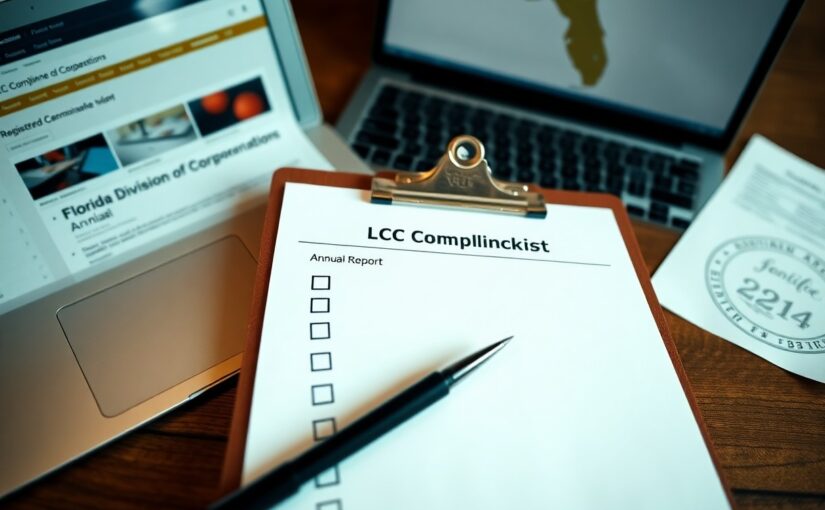
State Regulations and Permits

Your trucking business will require specific permits from the state of Florida, including a Motor Carrier Identification Number and, depending on your operation, various other state permits. It’s crucial to verify if your intended routes and cargo types demand additional licenses to operate legally, as non-compliance could result in fines or business interruptions.

Federal Regulations and Licensing

On a federal level, you must obtain a USDOT number and an MC number from the Federal Motor Carrier Safety Administration (FMCSA). This registration is mandatory for any trucking business involved in interstate commerce. Compliance with federal safety regulations, including vehicle maintenance records and driver qualifications, is not negotiable for operational legitimacy.

Once you secure your USDOT number and MC number, ensure to maintain compliance with other federal rules, such as maintaining a minimum level of insurance coverage. For instance, trucking companies transporting freight across state lines typically require minimum liability insurance of $750,000, although this can vary based on the type of cargo. Additionally, tracking Hours of Service (HOS) regulations is vital for your drivers to avoid penalties and ensure road safety. Regular audits from the FMCSA may also be a part of your operational requirements, demanding you keep detailed records of your vehicles, maintenance, and driver certifications up to date.

Operating Agreements for Trucking LLCs

The operating agreement is necessary for your trucking LLC, as it outlines the internal management structure and provides clarity on various operational aspects. This document not only protects your limited liability status but also sets the groundwork for how your business will function, addressing potential conflicts and decision-making processes.

Importance of an Operating Agreement

An operating agreement is vital for ensuring that all members understand their roles and responsibilities within your trucking LLC. It prevents misunderstandings and can provide a clear framework for resolving disputes, which is particularly important in the fast-paced trucking industry where timing and reliability are vital.

Key Elements to Include

Integral components of an operating agreement should encompass member roles, capital contributions, profit distribution, and procedures for adding or removing members. Additionally, outlining the decision-making process, including how disputes will be handled, is necessary for smooth operations.

In detailing member roles, specify responsibilities such as who manages the fleet, oversees safety compliance, and handles financial matters. Clearly state the initial capital contributions for each member, ensuring all parties know what is expected of them financially. Profit distribution should be aligned with member contributions or as agreed upon. Including a section on decision-making routes-like requiring a supermajority for major business changes-will help avoid conflicts. Lastly, lay out a clear dispute resolution process, whether through mediation or arbitration, to handle disagreements effectively and keep your operations running smoothly.

Insurance Considerations for Trucking LLC

In the trucking industry, obtaining adequate insurance coverage is vital to protect your business from various risks. Insurance not only safeguards your assets but also ensures compliance with state and federal regulations. Failure to carry the necessary insurance can result in severe penalties, liability issues, and financial loss, making it a key aspect of your operations.

Types of Insurance Coverage Needed

Your trucking LLC will require various types of insurance to address specific risks associated with transportation. These typically include:

  • Liability Insurance
  • Cargo Insurance
  • Physical Damage Insurance
  • Bobtail Insurance
  • Workers’ Compensation

Recognizing the importance of each coverage type can help you tailor your insurance portfolio effectively.

Insurance Type Description
Liability Insurance Covers third-party bodily injury and property damage claims.
Cargo Insurance Protects the goods you transport against theft and damage.
Physical Damage Insurance Offers protection for your truck in case of an accident.
Bobtail Insurance Covers liability when driving without a trailer.
Workers’ Compensation Covers employee injuries that occur while working.

Cost Factors and Considerations

When evaluating insurance for your trucking LLC, several cost factors come into play. These include vehicle type, driver experience, and your business’s claims history. Different insurance providers may also offer varying rates, so shopping around is wise.

  • Driver Records
  • Number of Vehicles
  • Type of Cargo
  • Geographic Area of Operation
  • Insurance Deductibles

Thou need to assess these factors carefully to find the best coverage at the most competitive rates.

Understanding in detail the nuances of cost factors can help streamline your budget effectively. Factors like the jurisdiction in which you operate and the miles traveled will influence premiums. Additionally, investing in safety measures like training programs can positively impact your overall insurance costs.

  • Safety Programs
  • Fleet Maintenance
  • Type of Operations (Long-haul vs. Local)
  • Insurance Bundling Options
  • Market Competition

Thou should prioritize evaluating these elements to optimize your expenditure on insurance.

Maintaining Your Florida LLC

Ongoing management of your LLC is important for its success. To ensure that your trucking business remains compliant and operates smoothly, pay attention to key administrative tasks and deadlines. For detailed insights, read about How to Get an LLC for a Trucking Company.

Annual Reports and Fees

Your Florida LLC must file an annual report with the state to maintain active status. The filing fee is $138.75, and the deadline is May 1st each year. Failure to comply could lead to penalties or involuntary dissolution of your LLC.

Best Practices for Record Keeping

Effective record-keeping is vital for tracking business expenses, revenues, and compliance documents. Use accounting software to streamline this process, ensuring all financial records are updated regularly and organized for easy access during audits or reviews.

Keeping detailed records not only aids in tax preparation but also supports financial decision-making for your trucking business. Store receipts, invoices, and contracts in a secure location, and consider maintaining digital backups for additional security. Regularly review your records to identify trends in expenses and revenues, ensuring you stay on top of your financial health.

Final Words

Ultimately, establishing a Florida LLC for your trucking business offers you significant advantages, including liability protection and tax benefits. This structure enhances your professionalism and helps in building credibility with clients and partners. By complying with state regulations and maintaining proper documentation, you can ensure smooth operations and lay a solid foundation for growth. Taking these steps not only safeguards your personal assets but also positions your business for long-term success in the competitive trucking industry.