18-Aug-2026
What Is the PATRIOT Act ID Form in a Loan Signing?
Many borrowers encounter the PATRIOT Act ID Form during a loan signing and wonder about its purpose. You are required to present identification under this form to comply with federal anti-money laundering regulations. It is a standard part of real estate closings and refinancing transactions, ensuring the person signing the documents is who they claim to be. The form itself does not collect sensitive financial data but confirms identity through government-issued IDs.
GET THE NOTARY FIELD GUIDE, CHECKLIST & CHEAT SHEETS
The Nature of the Document
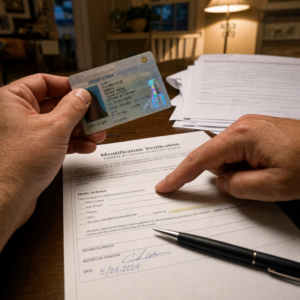
You encounter the PATRIOT Act ID form during loan signings as a standard part of federal compliance. It is not a loan agreement or a notarization certificate but a verification tool required by financial institutions. Your role is to confirm the identity of the signer using government-issued photo identification. The form typically records the type of ID presented, its number, and the issuing state or agency. A driver’s license from Texas or a U.S. passport are common examples you will likely see. This documentation supports anti-money laundering efforts under the USA PATRIOT Act. You do not notarize the form itself, but your presence validates the identity check. Financial institutions retain this form separately from the closing package. Your accurate completion helps prevent identity fraud and ensures the transaction meets federal oversight standards.
The Notary’s Duty
As the notary, you verify the signer’s identity using government-issued photo identification and confirm their willingness to sign. You must ensure the PATRIOT Act ID form is completed accurately, recording the type of ID presented, its number, and the issuing state or country. Your seal and signature certify this process was performed according to state law and federal requirements, creating a legal record that protects all parties involved.
Required Information
Provide your full legal name, current residential address, and date of birth when completing the PATRIOT Act ID form. You must also present a valid government-issued photo ID, such as a driver’s license or passport, and confirm your Social Security number. The notary records the type of ID presented, its issuing agency, and expiration date to satisfy federal verification standards. A mid-sized SaaS firm handling remote online notarizations logs these details electronically to maintain compliance across state lines.
Why It Matters
Compliance with the PATRIOT Act ID form protects both the lender and you from identity fraud during loan transactions. Your valid government-issued photo ID confirms your legal identity, ensuring the signing aligns with federal anti-money laundering requirements. A mismatch or expired ID can delay funding, as seen when a borrower in Texas used an outdated driver’s license, requiring a rescheduled appointment. Proper verification at the outset prevents costly interruptions later.
The Signing Process
During the loan signing, you will encounter the PATRIOT Act ID form as part of the identity verification step. You must present a valid government-issued photo ID, such as a driver’s license or passport, which the notary will review and record. The notary logs specific details from the ID, including the type, issuing state or country, and expiration date. This information is entered directly onto the form without alteration or summarization. A national retail bank, for example, requires this exact process across all its mortgage closings to comply with federal guidelines. Your signature on the form confirms the accuracy of the information provided at that moment.
Conclusion
You provide the PATRIOT Act ID form during a loan signing to confirm your identity under federal law. This process aligns with anti-money laundering requirements and ensures the transaction’s legitimacy. A government-issued photo ID, such as a driver’s license or passport, typically fulfills the requirement. The notary verifies the document’s validity and matches it to your appearance. Failure to present acceptable identification delays or halts the signing. Compliance protects all parties involved and upholds the integrity of real estate and lending procedures.
Leave a Reply